Introduction
Running a business today can feel like juggling too many tabs at once — managing customers, operations, finances, and teams while keeping technology running smoothly. Whether you lead a startup, a retail chain, or a mid-sized enterprise, your success depends on a reliable, secure IT foundation.
At first, it may seem easier to fix issues when they arise. But unmanaged IT problems drain time, create risks, and hinder growth. That’s where managed IT services make a difference — offering proactive monitoring, expert support, and predictable maintenance.
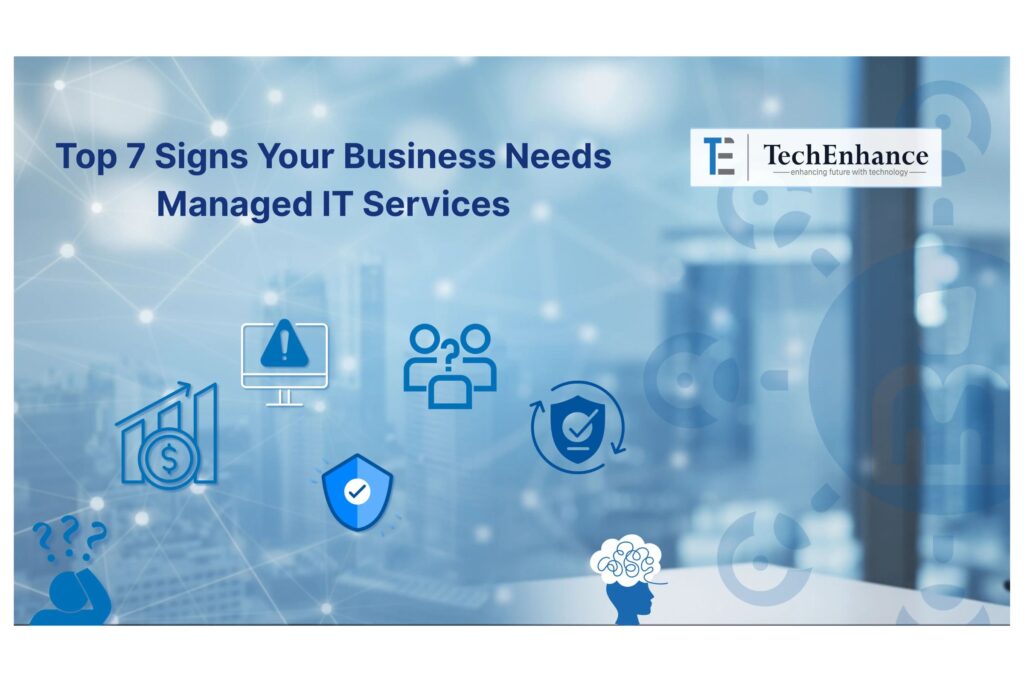
So, how do you know when it’s time to make the switch? Here are seven signs your organization is ready for a managed IT solution.
IT Issues Always Show Up at the Worst Time
Printer not working on deadline day, Wi-Fi dropping in the middle of the call, your team can;t access files just as a deadline looms, server crashing during client presentations, IT issues always pop up at the worst times.
Any small issues at the wrong time will lead to your team scrambling for hours, piecing files from old backups. Every time, you fix the issue temporarily, the breakdown keeps happening and at higher costs. Unmanaged IT issues durian both time and money while hindering your team’s focus.
With managed IT support services, problems are anticipated before they become emergencies. For example, automated monitoring can alert technicians that your server’s hard drive is 80% full and fix it before the crash happens.
Cybersecurity Feels Like a Guessing Game
According to IBM’s 2024 Cost of a Data Breach Report, the average breach costs over $4.5 million. Yet many businesses still rely on outdated antivirus software and irregular updates.
No matter your size, every organization is vulnerable to cyber threats. A managed provider ensures multi-layered protection — from firewalls and intrusion detection to encrypted backups and employee awareness training — offering 24/7 defense and peace of mind.
For a detailed look at how continuous monitoring and governance simplify data protection, explore our Cybersecurity & Compliance Made Simple with Managed IT Services article.

Your In-House Team Is Drowning
In many small businesses, one person handles everything — from fixing Wi-Fi to maintaining servers. This setup works initially but quickly becomes unsustainable.
Without external expertise, IT teams risk burnout and security blind spots. Partnering with a service provider gives access to a complete team — network engineers, cloud specialists, and cybersecurity professionals — at a much lower cost than hiring individually.
Outdated Technology Is Stopping Your Growth
Your business is expanding — opening new branches, hiring more staff, and adopting digital tools. But if your IT infrastructure can’t scale, growth hits a ceiling.
Cloud management services ensure your systems evolve with your ambitions — scaling storage, enabling hybrid work, and implementing automation tools seamlessly.
Learn how technology supports flexible, secure work environments in our Future of Work: Role of Managed IT Services in Remote & Hybrid Models post.
You Don’t Have a Recovery Plan
What if ransomware locks your client files, or a server crash wipes critical data? If your answer is “we’ll figure it out,” that’s a serious risk.
Disasters — whether natural, technical, or human — can lead to prolonged downtime and lost trust. Managed service providers design robust recovery systems with automated backups, redundant storage, and step-by-step restoration protocols.
IT Costs Are Unpredictable and Always Rising
Do your IT expenses feel like surprise bills? One month you’re fine, the next you’re spending thousands on emergency fixes, hardware replacements, or last minute consultant fees.
It’s stressful and unpredictable.
Managed IT services offer predictable, subscription-based pricing. Instead of unpredictable spikes, you get a flat monthly fee covering monitoring, maintenance, and support. Businesses can now plan expenses better, allocate resources strategically, and avoid being blindsided by sudden IT crises.
You’re Falling Behind on Compliance and Industry Standards
If your business handles sensitive information like customer data, financial transactions, or healthcare records, compliance isn’t optional. Regulations like HIPAA, GDPR, or PCI DSS require strict IT controls. Falling short leads to heavy fines, legal issues, and reputational damage.
Managed providers specialize in compliance support, ensuring your systems meet standards and documenting everything for audits.
Conclusion
If these signs sound familiar, it’s not about failure — it’s about evolution. Technology now defines how businesses communicate, collaborate, and compete.
By adopting managed IT services, organizations gain stability, security, and scalability — turning IT from a recurring headache into a reliable foundation for growth.
To learn more about building a resilient IT ecosystem that aligns with your business goals, visit our Managed IT Services page.