Introduction
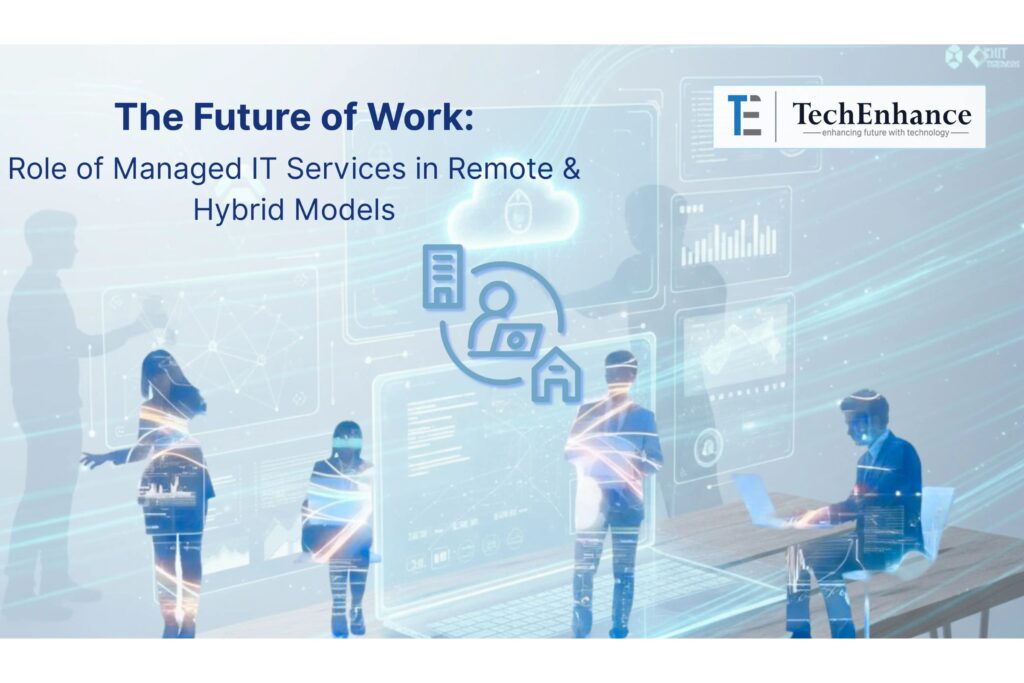
Let’s split the last decade into two: pre-pandemic and post-pandemic. The workplace has changed more in the past few years than in the previous 30. Before, work meant commuting, offices, and company desktops. Today, it’s fluid, digital-first, and often remote or hybrid. But this shift brings challenges — managing devices across locations, securing off-site networks, and keeping data flowing smoothly. Just as office buildings need power and security, virtual workspaces rely on IT infrastructure management services, cloud consulting services, and managed IT service providers. In this article, we explore how managed IT is quietly becoming the backbone of the modern workplace.
Why Remote & Hybrid Work Needs a New IT Approach
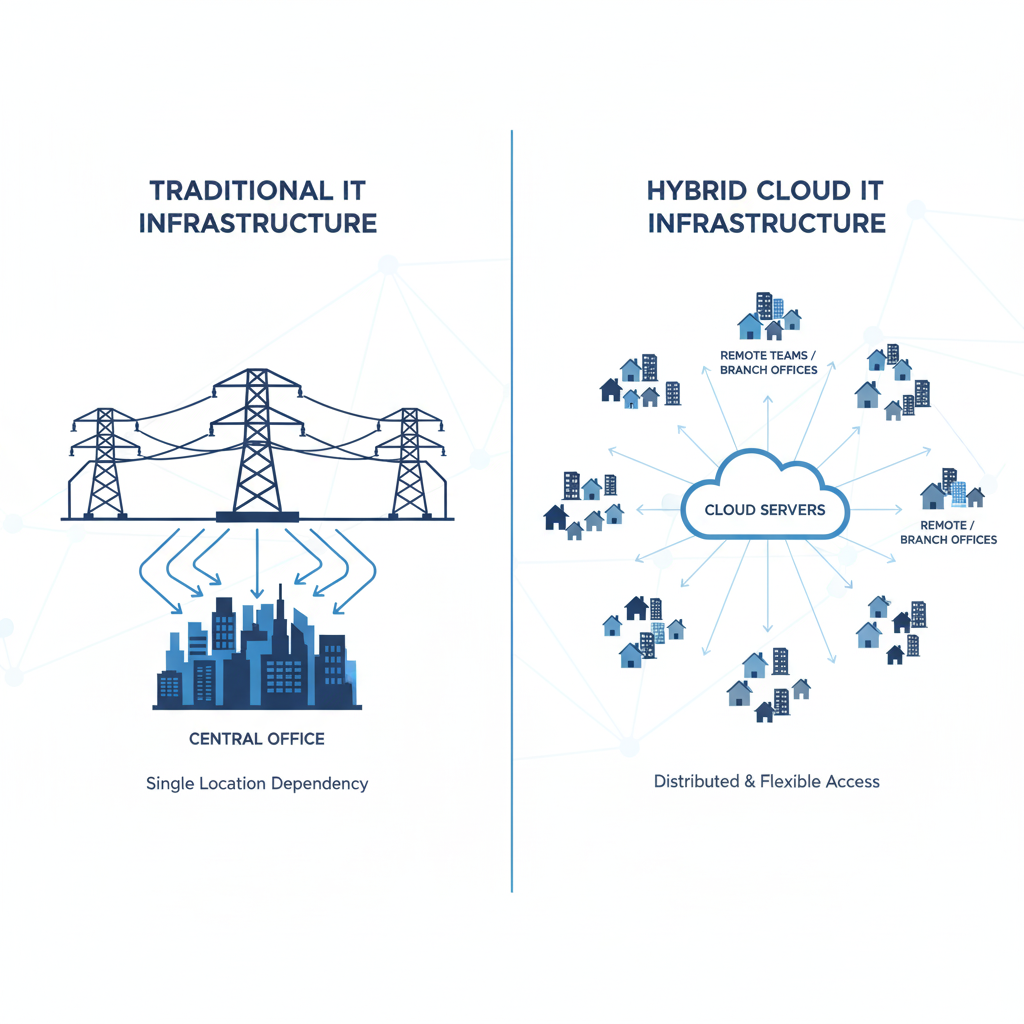
Traditional IT setups were built around centralized offices. Like an old power grid designed to supply electricity to one city. It worked perfectly as long as everyone lived in the city. But suddenly, people are scattered across towns, villages, and new neighborhoods. The grid struggles to keep up.
Remote and hybrid work is that “new geography” for IT. Companies no longer rely on office-bound servers or a small IT team running between desks. They need systems that stretch, adapt, and stay resilient across borders and time zones.
This is where IT infrastructure management services play a defining role—ensuring that the backbone of business technology evolves from a local setup to a truly global framework.

The Core Challenges of Remote & Hybrid IT
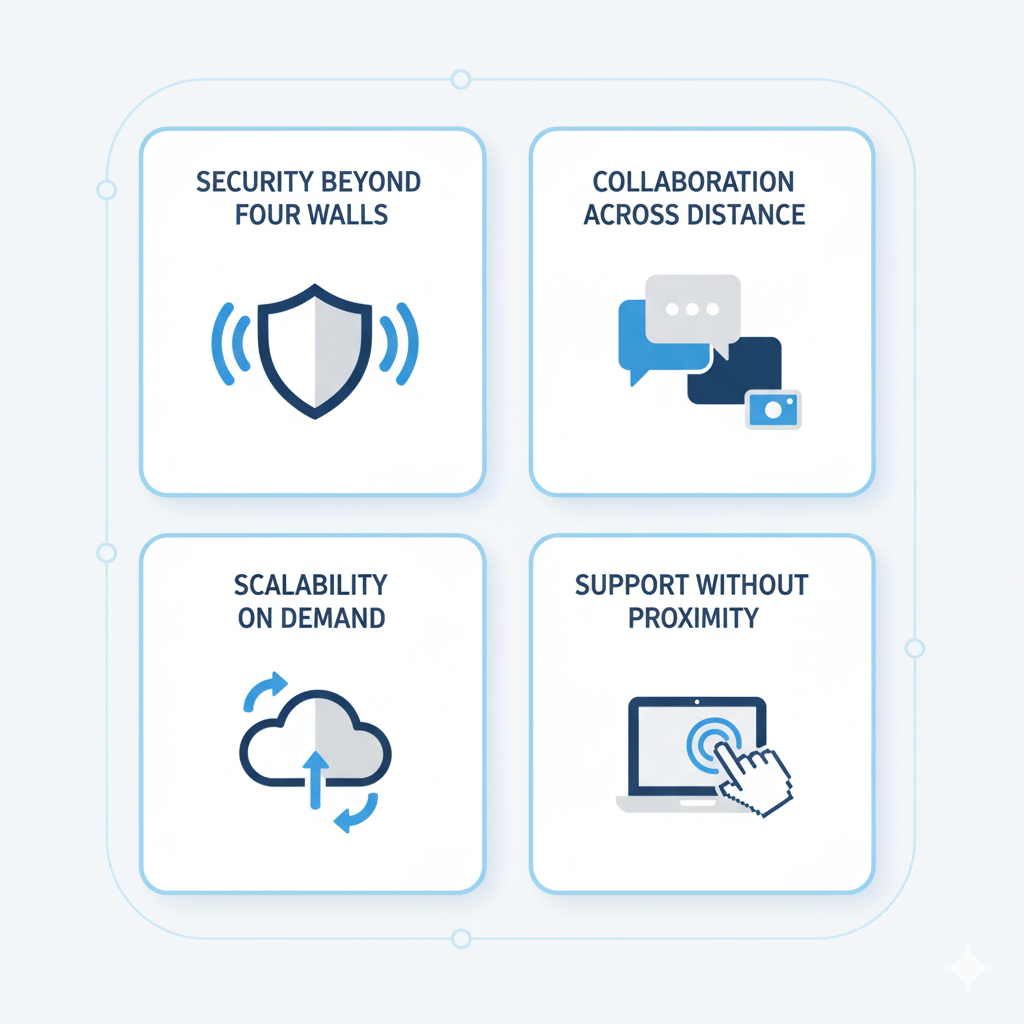
To understand the role of managed services, we must first look at the real pain points businesses face in this new world of work
Security Beyond Four Walls:
The office firewall once served as a moat around company data. But now, employees work from cafés, airports, and home Wi-Fi. Cyberattacks exploit these weak spots, making endpoint protection and identity management mission-critical. For example, you can explore advanced best practices through cybersecurity insights from Microsoft.
Collaboration Across Distance:
Tools like Slack, Teams, and Zoom have bridged communication, but integrating them with core systems like CRM, ERP, and cloud storage remains challenging. Poorly managed setups lead to productivity black holes.
Scalability on Demand:
A team may expand by 50 new employees overnight, spread across five cities. Without cloud management services, provisioning resources at that speed is nearly impossible.
Support Without Proximity:
When employees worked in one office, IT support could walk over to fix a laptop. Today, troubleshooting must happen remotely, often across time zones, without disrupting workflows.
How Managed IT Services Are Redefining the Future of Work
Managed IT isn’t just an expedient. It’s the structural redesign businesses need. Let’s break this down.
Security as a Digital Immune System
Your business is like a human body. In an office-only setup, you could protect it with a strong outer skin (the firewall). But in a hybrid setup, you need an immune system that works everywhere, constantly scrutinizing, detecting, and neutralizing threats.
Managed IT services providers deploy this “immune system” through endpoint security, zero-trust architecture, and real-time monitoring. Learn more about zero-trust security frameworks and how they strengthen hybrid environments.
Cloud as the New Office
In hybrid work, the cloud becomes the “building” where employees meet, store, and collaborate. But just like any office, it needs management, who has keys, what data is stored where, and how resources scale during peak hours. This is where cloud management services matter.
Support Without Borders
Imagine running a global hotel chain where guests check in at all hours. You can’t rely on one receptionist sitting in one lobby. You need 24/7 multilingual support centers.
That’s exactly what managed IT support looks like. Through remote help desks, prescient monitoring, and automated ticketing, employees get support whenever issues arise.
Scalability as a Business Muscle
The future of work demands muscles that flex on demand. When hiring surges, IT resources must scale instantly. When demand drops, costs must shrink. Managed IT allows exactly this.
Compliance Without Chaos
Hybrid work makes regulatory compliance slippery. Data now moves across personal devices, shared networks, and multiple jurisdictions. Managed services ensure guardrails are in place — from GDPR-compliant storage to industry-specific rules like HIPAA for healthcare. You can read more about GDPR compliance for hybrid businesses.
The Airline Model
Let’s think of your business like an airline. Your employees are passengers, your IT systems are the planes, and your workflows are the routes.
In the old world, all flights left from one airport (the office). Today, passengers board from multiple airports (remote locations). To keep things running, you don’t just need planes. You need air traffic control, maintenance crews, and 24/7 monitoring.
That’s what managed IT provides. The unseen but essential infrastructure that ensures everyone gets where they need to go, safely and on time.
Strategic Benefits Beyond IT
The role of managed IT in hybrid work isn’t limited to fixing laptops or managing cloud logins. It reshapes how businesses operate at a strategic level:
- Cost Predictability: Moving from unpredictable IT spends to fixed, transparent pricing.
- Talent Attraction: Offering seamless remote work makes companies more appealing to younger, digital-native talent.
- Business Continuity: With backups and redundancies in place, operations keep running even in crises.
- Innovation Enablement: By outsourcing IT infrastructure headaches, leaders can focus on launching new products and markets.
Managed IT as the Silent Architect of Work
The future of work is not about choosing between office, remote, or hybrid. It’s about designing systems that allow flexibility without chaos, security without friction, and growth without bottlenecks.
Modern businesses need IT infrastructure management services as the architects of their digital workplace.
The most successful companies in the coming decade won’t be those who resist remote and hybrid models, but those who embrace them with confidence. Backed by reliable, scalable, and secure managed IT support.
Conclusion
Remote and hybrid work are here to stay, not as temporary binds but as permanent fixtures of business life. The role of managed IT services providers and cloud management services will only grow stronger. Enabling businesses to thrive in an unpredictable, digital-first era.
If the office was once the engine of productivity, managed IT is now the fuel, the oil, and the maintenance crew that keeps the engine running. Businesses that recognize this shift will not just adapt to the future of work, they will define it.