Introduction
In the data economy of today, organizations manage enormous amounts of information flowing from various sources — applications, IoT sensors, customer management systems, and digital platforms. The legacy data warehouses and data lakes used to be the bedrock for storing and analyzing data. With expanding data diversity and scale, businesses require an integrated, agile solution that can provide real-time insights and efficiency.
That is where data lakehouse architecture comes in — the future of next-gen data management platforms.
What is a Data Lakehouse?
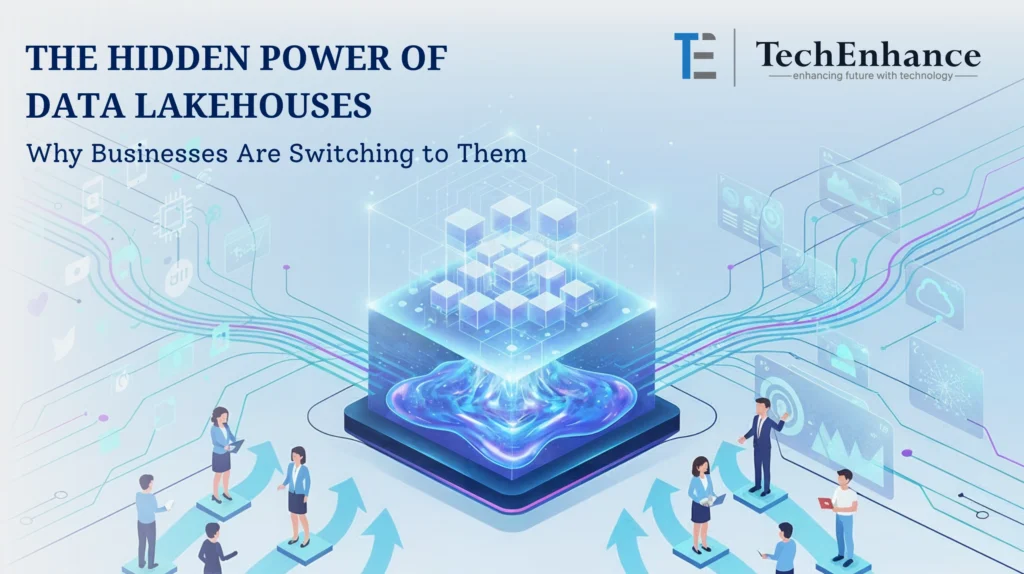
Data lakehouse architecture integrates the best aspects of data lakes and data warehouses into one unified system. It takes the scalability and low-cost storage of data lakes and marries them with the structure, consistency, and governance of data warehouses.
This hybrid solution enables organizations to have both structured, semi-structured, and unstructured data stored together — supporting seamless analytics, reporting, and machine learning uses. The end result is a streamlined data environment supporting both innovation and compliance in all industries.
To explore this concept further, you can refer to Databricks’ overview of data lakehouses for a detailed technical explanation of how this architecture works.
Why Companies Are Moving to Lakehouses
Unified Data Ecosystem
Rather than having different systems for warehouses and data lakes, lakehouses combine them. This minimizes duplication, makes maintenance easier, and enhances data accessibility as a whole. It also allows teams to work from a common source of truth, enhancing accuracy and collaboration.
A detailed comparison by Snowflake highlights how this unified approach simplifies analytics pipelines across departments.
Real-Time Insights and Advanced Analytics
Contemporary lakehouses enable real-time data ingestion and processing. With integration with cloud-based platforms and artificial intelligence frameworks, companies can derive insights quicker and respond to shifts in customer behavior, market dynamics, or operational performance in near real-time.
For a deeper understanding of how data flows through modern architectures, check out Batch vs. Real-Time Data Pipelines and explore which model suits your business use case.
Cost Efficiency and Scalability
Since they run on cloud infrastructure, lakehouses are scalable up or down based on data workloads. This ability provides the best utilization of resources, allowing companies to keep their costs in check while efficiently handling large and complex datasets.
Effective Data Governance and Security
Integrated governance capabilities, including access control, audit logs, and lineage, streamline compliance with regulatory requirements like GDPR or HIPAA. It is essential for industries like finance, healthcare, and manufacturing, where confidentiality and data integrity are paramount.
The Role of Data Engineering in Lakehouse Implementation
Migrating to a lakehouse model is more than technology adoption — it needs deliberate consideration for architecture design, data integration, and process automation. Data engineers are responsible for smooth migration and long-term scalability.
Their work typically involves:
Evaluating current data infrastructures and pinpointing integration hurdles.
Crafting optimal cloud-based data pipelines for ingestion, transformation, and storage.
Deploying quality checks, governance processes, and compliance regimes.
Increasing performance for real-time analysis and low latency.
By addressing these areas, organizations can ensure maximum value from their data assets and guarantee long-term sustainability of their new architecture.
Final Thoughts
The transformation from legacy warehouses and lakes to lakehouses is a significant leap forward in data storage, management, and usage. It closes the loop between raw data and actionable intelligence, allowing companies to make quicker, wiser, and more informed decisions.
As innovation continues to be driven by data, embracing flexible and consolidated data platforms will be the key for businesses that want to stay ahead in an increasingly digitalized world.
Learn how TechEnhance’s Data Engineering Consulting Services help businesses design scalable, secure, and cloud-native data ecosystems built for future growth.