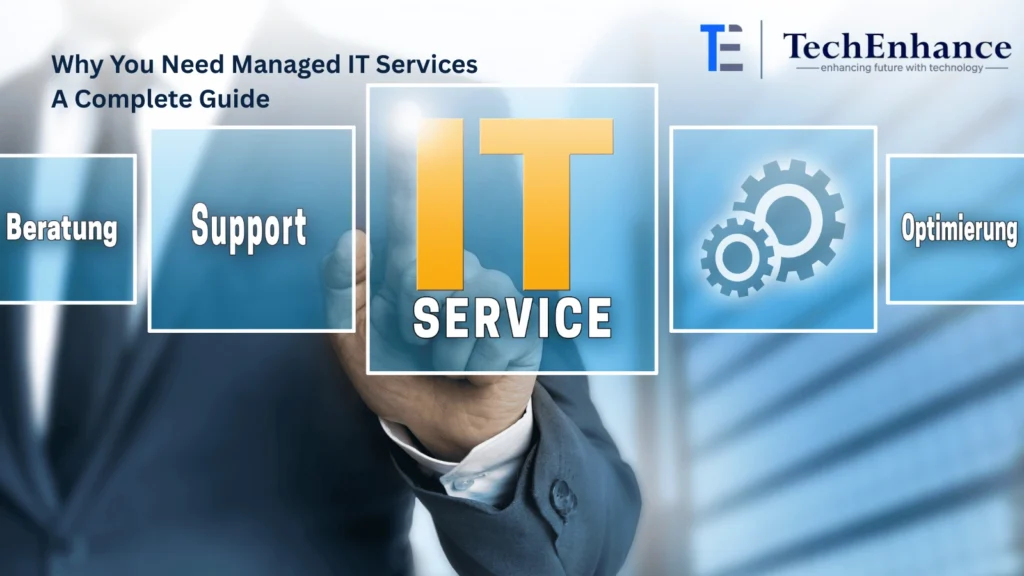
In an era where technology drives every aspect of business operations, organizations face mounting pressure to maintain robust IT infrastructure while simultaneously focusing on core business objectives. The reality is stark: managing technology in-house has become increasingly complex, expensive, and time-consuming. This is precisely why you need managed IT services, to transform your technology from a constant challenge into a strategic advantage.
Understanding What is a Managed IT Service Provider
A managed IT service provider (MSP) is a specialized company that assumes responsibility for managing, monitoring, and maintaining an organization’s IT infrastructure and end-user systems. Unlike traditional break-fix IT support that responds reactively to problems, managed IT services deliver proactive, comprehensive technology management that keeps systems running smoothly before issues arise.
Research indicates that global spending on IT services is projected to reach $5.74 trillion by 2025, demonstrating just how critical managed support has become for operational excellence. Furthermore, the managed services market is expected to grow from $363 billion to $511 billion by 2029, reflecting the increasing recognition among businesses of all sizes that outsourcing IT management delivers superior value compared to handling everything internally.
What is Included in Managed IT Services
Understanding what managed IT services encompass helps organizations recognize their comprehensive value. A full-service MSP typically provides:
- Infrastructure Management: Continuous monitoring and maintenance of servers, networks, and cloud environments to ensure optimal performance and reliability.
- Cybersecurity Services: Advanced threat detection, prevention, and response capabilities including firewall management, antivirus protection, security audits, and compliance monitoring to protect against evolving cyber threats.
- Help Desk Support: Round-the-clock technical assistance for end users experiencing software, hardware, or connectivity issues, ensuring minimal disruption to productivity.
- Backup and Disaster Recovery: Automated data backup systems and comprehensive recovery plans that protect business continuity in the event of system failures, cyberattacks, or natural disasters.
- Cloud Management: Expert administration of cloud platforms, including migration services, optimization, and ongoing management to maximize cloud investment returns.
- Strategic IT Planning: Consultation on technology roadmaps, digital transformation initiatives, and IT budgeting to align technology investments with business objectives.
- Software Updates and Patch Management: Systematic application of security patches and software updates across all systems to minimize vulnerabilities and maintain compliance.
Why Choose Managed IT Services Over In-House Teams

The traditional approach of relying exclusively on internal IT staff presents significant limitations in today’s fast-evolving technology landscape. Organizations that depend solely on in-house teams face multiple challenges that managed services effectively address.
In-House IT Dilemma
Internal IT departments struggle with resource constraints that make it difficult to deliver comprehensive support. Recruiting and retaining qualified IT professionals requires substantial investment, over $1,886 per employee for training alone, and the ongoing IT talent shortage makes finding skilled specialists increasingly challenging. Additionally, in-house teams often lack the breadth of expertise needed across multiple technology domains, from cybersecurity to cloud architecture to emerging technologies like artificial intelligence.
Perhaps most critically, internal teams typically operate reactively, responding to problems as they occur rather than preventing them. This reactive approach leads to costly downtime, frustrated users, and missed opportunities to leverage technology strategically.
Managed Services Advantage
Managed IT services eliminate these constraints by providing access to entire teams of specialists at predictable monthly rates. This model delivers immediate benefits: organizations gain expertise across multiple technology areas without the overhead of hiring full-time staff, scale resources up or down based on changing needs, and shift from reactive firefighting to proactive optimization.

Benefits of Managed IT Services
The advantages of partnering with a managed service provider extend far beyond basic technical support. Here’s why you need managed IT services to drive business success:
1. Enhanced Focus on Core Business Objectives
As businesses grow, technology needs to expand exponentially. In-house IT teams become overwhelmed managing day-to-day technical issues, pulling focus away from strategic initiatives that drive revenue and growth. Managed IT services free your internal resources to concentrate on business-critical activities while experts handle technology management. This separation allows companies to pursue innovation and competitive differentiation without being constrained by technical limitations.
2. Access to Specialized Expertise
Technology evolves rapidly, with new platforms, security threats, and best practices emerging constantly. MSPs invest continuously in training their teams across diverse technology domains, providing clients with access to specialists in areas like cloud computing, cybersecurity, data analytics, and application development. This breadth of expertise would be prohibitively expensive for most organizations to develop internally.
3. Significant Cost Optimization
Research demonstrates that businesses outsourcing IT operations reduce costs by up to 30% compared to managing everything in-house. Managed services convert unpredictable capital expenses into predictable operating expenses through flat monthly fees. Organizations eliminate costs associated with recruiting, training, and retaining IT staff, while gaining access to enterprise-grade tools and technologies included in their service agreement.
4. Seamless Scalability
Business requirements change constantly, and technology infrastructure must adapt accordingly. Whether expanding into new markets, launching new products, or adjusting to seasonal demand fluctuations, managed services scale effortlessly to match organizational needs. MSPs can rapidly deploy additional resources or specialized expertise for specific projects without the delays inherent in traditional hiring processes.
5. Proactive Problem Prevention
Network downtime costs businesses an average of $5,600 per minute, over $300,000 per hour. Rather than waiting for systems to fail, managed service providers use advanced monitoring tools to identify and resolve potential issues before they impact operations. This proactive approach dramatically reduces downtime, maintains productivity, and prevents the cascading problems that often result from system failures.
6. Round-the-Clock Support Availability
Technology issues don’t respect business hours. With managed IT services, organizations gain 24/7 support coverage without maintaining expensive on-call rotations. Global MSPs leverage time zones strategically, ensuring expert assistance is always available regardless of when problems occur. This continuous coverage proves especially valuable for businesses with international operations or customer-facing systems requiring constant uptime.
7. Enterprise-Grade Security and Compliance
Cybersecurity threats grow more sophisticated daily, with ransomware, phishing attacks, and data breaches posing existential risks to businesses of all sizes. MSPs maintain dedicated security teams that monitor threat landscapes continuously, implement multi-layered defense strategies, and ensure compliance with industry regulations. This level of security expertise and vigilance would require substantial investment to replicate internally.
8. Access to Cutting-Edge Technology
Managed service providers invest heavily in advanced tools, platforms, and technologies that they make available to all clients. Organizations benefit from enterprise-grade monitoring systems, automation tools, security platforms, and management software without bearing the full acquisition and maintenance costs. This shared resource model enables even smaller businesses to leverage technology typically available only to large enterprises.
9. Simplified Vendor Management
Managing relationships with multiple technology vendors, from software providers to hardware manufacturers to telecommunications companies, consumes significant time and creates coordination challenges. MSPs serve as a single point of contact, handling vendor management, procurement, and issue escalation on behalf of clients. This simplification streamlines operations and ensures accountability.
10. Strategic Technology Planning
Beyond day-to-day management, forward-thinking MSPs function as strategic technology advisors. They help organizations develop comprehensive IT roadmaps aligned with business objectives, identify opportunities for technology-driven innovation, and make informed decisions about technology investments. This strategic partnership transforms IT from a cost center into a value driver.
Why Use Managed IT Services: Real-World Impact

Organizations across industries report transformative results after partnering with managed service providers. A logistics company managing complex transportation systems across multiple environments found their internal resources strained by the demands of supporting end users while maintaining infrastructure.
By adopting managed services, they achieved improved system performance and reliability, enhanced customer service capabilities, and operational continuity across global locations, all while reducing overall IT costs.
The measurable benefits extend across multiple dimensions: reduced IT expenses through optimized resource allocation, decreased downtime resulting in higher productivity, improved security posture minimizing breach risks, enhanced user satisfaction from responsive support, and accelerated innovation enabled by freed internal resources.
Choosing the Right Managed IT Service Provider
Understanding why you need managed IT services is only the first step. Selecting the right provider requires careful evaluation of several critical factors:
Look for providers with proven experience in your industry who understand sector-specific challenges and compliance requirements. Evaluate their technical expertise across the technologies your organization uses or plans to adopt. Assess their service level agreements to ensure they guarantee appropriate uptime and response times for your business needs.
Consider the provider’s scalability, can they grow alongside your organization? Examine their security credentials and certifications. Request references from current clients with similar profiles to your organization. Finally, ensure their communication style and approach align with your company culture for effective long-term partnership.
Future of Managed IT Services
As technology continues evolving, managed services adapt to meet emerging needs. Artificial intelligence and machine learning are increasingly integrated into managed services platforms, enabling predictive maintenance, automated remediation, and intelligent resource optimization. The shift toward remote work has elevated the importance of cloud-based services and endpoint management. Meanwhile, the explosion of data is driving demand for managed analytics services that help organizations extract actionable insights from information assets.
Forward-thinking organizations recognize that the question isn’t whether to use managed IT services, but rather how quickly they can implement them to gain competitive advantage.
Conclusion: Strategic Imperative of Managed IT Services
The evidence is overwhelming: modern businesses require comprehensive, proactive IT management to remain competitive, secure, and operationally efficient. In-house teams alone cannot deliver the breadth of expertise, continuous monitoring, and strategic guidance necessary in today’s complex technology environment.
Why you need managed IT services comes down to a fundamental business reality, technology has become too critical and too complex to manage as a secondary function. Organizations that embrace managed IT services position themselves for sustainable growth, operational excellence, and technological innovation. They convert unpredictable IT costs into predictable investments, transform reactive firefighting into proactive optimization, and free internal resources to focus on activities that directly drive business value.
The question isn’t whether your organization needs managed IT services, it’s how much longer you can afford to operate without them. As technology continues accelerating and cyber threats evolve, the gap between organizations with professional IT management and those relying on limited internal resources will only widen. Investing in managed services today isn’t merely an operational decision, it’s a strategic imperative for long-term business success.
Ready to transform your IT infrastructure and unlock your organization’s full potential? Explore our comprehensive managed IT services and discover how TechEnhance can become your trusted technology partner.