
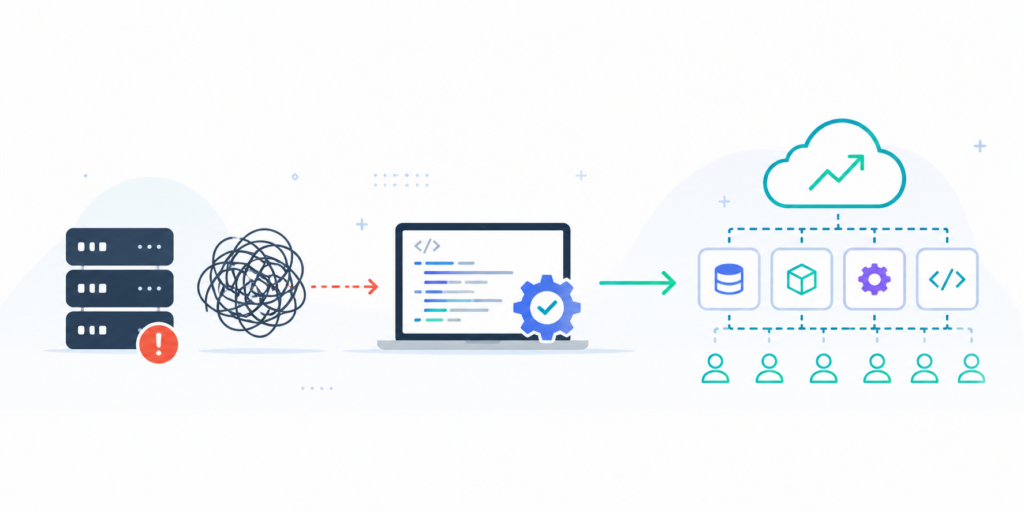
Growth is often treated as the ultimate validation. More users, rising revenue, and increasing demand all signal that your business is moving forward. But growth has another side—it acts as a pressure test. One that exposes every weakness your system was quietly hiding. What once felt stable begins to slow down, break, or behave unpredictably. This is where tech stack scaling issues emerge—not as new problems, but as existing flaws finally coming to the surface.
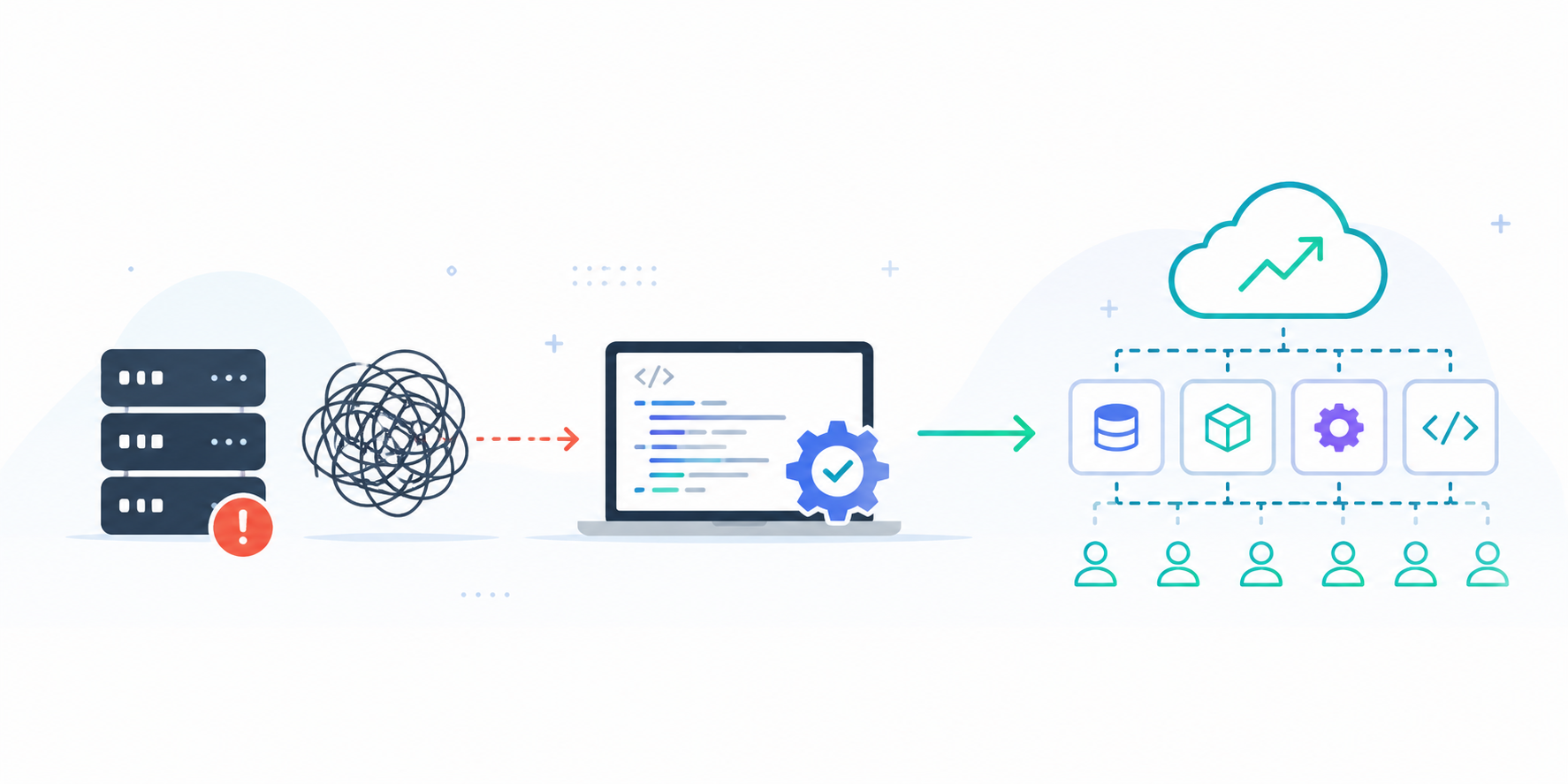
Growth Doesn’t Break Systems—It Reveals Them
It’s tempting to blame growth when systems start failing. But growth itself isn’t the problem. It simply amplifies what already exists.
In the early stages, your product operates under low stress. Minor inefficiencies go unnoticed. A slightly slow database, unoptimized code, or manual deployment process doesn’t feel critical when only a handful of users are active.
But as usage increases, these inefficiencies compound. What was once manageable becomes disruptive. This is why tech stack scaling issues often appear suddenly—they were always there, just hidden beneath low demand.
What Is a Tech Stack (And Why It Matters)
Your tech stack is the foundation of your product. It includes:
- Frontend frameworks
- Backend architecture
- Databases
- APIs and integrations
- Infrastructure and hosting
- Deployment and monitoring tools
A well-designed tech stack supports growth without friction. A poorly structured one becomes a bottleneck.
The key difference isn’t always the tools themselves—it’s how they are structured, connected, and optimized.
Common Tech Stack Scaling Issues
As products grow, certain challenges consistently appear. These tech stack scaling issues affect not just performance, but also user experience and team productivity.
Key Scaling Issues
| Issue | What It Looks Like | Business Impact |
|---|---|---|
| Performance Bottlenecks | Slow load times, lag | User frustration, drop-offs |
| Database Overload | Delayed queries, crashes | System instability |
| Poor Architecture | Hard to add features | Slower innovation |
| Lack of Automation | Manual deployments | Higher error rates |
| Inefficient Codebase | Frequent bugs | Increased maintenance time |
These issues rarely exist alone. They interact and amplify each other, creating a compounded slowdown across your system.
Why Early Decisions Lead to Scaling Problems
Most tech stack scaling issues can be traced back to early-stage decisions.
In the rush to launch, teams often:
- Prioritize speed over structure
- Choose tools based on familiarity
- Skip architecture planning
- Delay optimization
These decisions help you go to market faster—but they also create a fragile foundation.
As your product grows, this foundation starts to crack. Systems that once worked effortlessly now require constant fixes. Instead of building forward, your team starts firefighting.
The Domino Effect of Weak Tech Stacks
Scaling issues don’t stay contained—they spread.
A single weak point can trigger a chain reaction:
- A slow database increases response time
- Slow responses degrade user experience
- Poor experience leads to user churn
- Churn impacts revenue and growth
This domino effect highlights a critical truth:
tech stack scaling issues are not just technical—they are business-critical.
How Scaling Slows Down Development
One of the most overlooked impacts of scaling issues is reduced development speed.
As systems struggle:
- Developers spend more time fixing bugs
- Performance optimization becomes constant
- Unexpected issues interrupt workflows
This reduces the time available for building new features.
Impact on Development
| Factor | Before Scaling Issues | After Scaling Issues |
|---|---|---|
| Feature Development | Fast | Slower |
| Bug Fixing | Minimal | Frequent |
| Deployment | Smooth | Error-prone |
| Team Productivity | High | Reduced |
This creates a vicious cycle. Slower development leads to missed opportunities, which affects competitiveness.
Why Hiring More Developers Doesn’t Fix It
When progress slows, the instinct is to hire more developers. But this often backfires.
More developers introduce:
- Increased coordination overhead
- More dependencies
- Greater system complexity
If the foundation is weak, adding more people only adds pressure. Without fixing the underlying tech stack scaling issues, costs increase without meaningful gains in output.
What a Scalable Tech Stack Looks Like
A scalable system isn’t just built to work—it’s built to grow.
Characteristics of a Scalable Stack
- Modular Architecture
Components are independent and easy to update - Efficient Databases
Optimized for high-volume operations - Automation-First Approach
Minimal manual intervention in deployments and testing - Robust Infrastructure
Systems that can handle traffic spikes seamlessly - Continuous Monitoring
Real-time visibility into performance and issues
These elements ensure your system evolves with demand instead of breaking under it.
How to Fix Tech Stack Scaling Issues
Fixing scaling issues requires both technical upgrades and strategic thinking. The goal isn’t just to patch problems—it’s to build resilience.
1. Conduct a Tech Stack Audit
Identify bottlenecks, inefficiencies, and architectural weaknesses.
2. Optimize Architecture
Refactor systems to improve scalability and maintainability.
3. Implement Automation
Automate deployments, testing, and monitoring to reduce human error.
4. Upgrade Infrastructure
Adopt cloud-based systems that scale dynamically with demand.
5. Improve Code Quality
Clean, efficient code reduces bugs and improves performance.
6. Use Managed Services
Offload complex infrastructure tasks to specialized providers when needed.
The Role of Proactive Planning
The most effective way to handle tech stack scaling issues is to prevent them.
Proactive planning includes:
- Designing scalable architecture from day one
- Implementing DevOps practices early
- Continuously monitoring system performance
This approach shifts you from reactive problem-solving to controlled, predictable growth.
Why Growth Should Feel Smooth, Not Stressful
Scaling doesn’t have to feel chaotic.
When your tech stack is built for growth:
- Systems handle increased demand effortlessly
- Teams remain productive and focused
- Users enjoy a seamless experience
Growth becomes a sign of progress—not pressure.
Conclusion: Build for Growth Before It Happens
If your product delivers value, growth is inevitable. The real question is whether your systems are ready for it.
Ignoring scalability may not hurt immediately—but it creates risks that surface at the worst possible time.
By addressing tech stack scaling issues early, you build a foundation that supports:
- Faster development
- Better performance
- Sustainable growth
The strongest systems aren’t the ones that survive growth—they’re the ones designed for it.
🚀 Ready to Eliminate Tech Stack Bottlenecks?
If your systems are slowing you down, now is the time to act.
A well-optimized tech stack can unlock:
- Faster releases
- Improved reliability
- Seamless scalability
Start with a tech stack audit and take the first step toward building a system that grows with your business—not against it.