
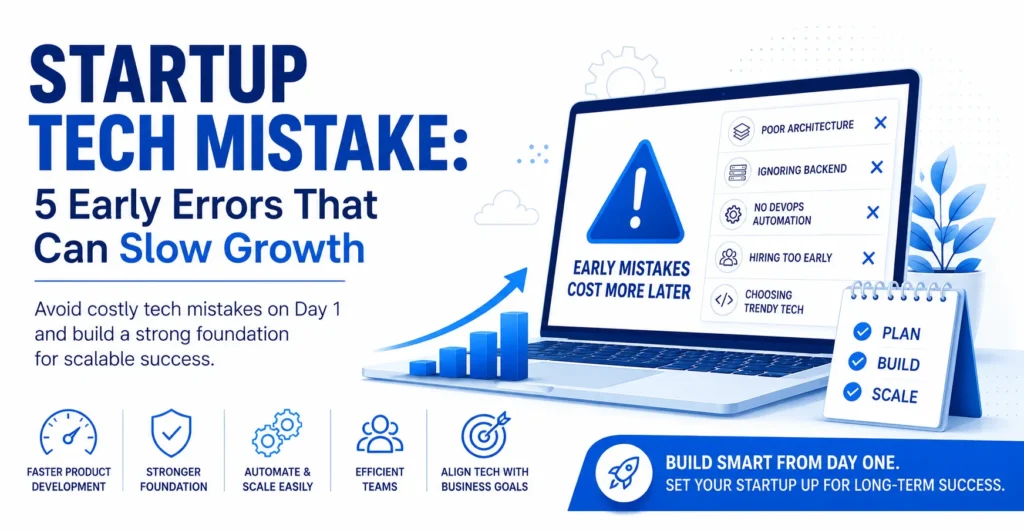
Most startups don’t fail because of bad ideas—they fail because of execution gaps that begin far earlier than expected. One of the biggest areas where things go wrong is technology. From day one, founders make decisions about their tech stack, hiring, infrastructure, and development approach that shape the future of their business. Unfortunately, many of these decisions are based on assumptions rather than strategy. These early startup tech mistakes may seem harmless in the beginning, but they compound over time, slowing growth, increasing costs, and creating unnecessary complexity.
Why Early Tech Decisions Matter More Than You Think
In the early stages, speed feels like the only priority. Founders want to launch quickly, validate ideas, and start generating traction. This urgency often leads to shortcuts in technology decisions. While this approach can help you get to market faster, it also creates a fragile foundation that struggles to support growth.
The problem is that technology is not just a tool—it’s the backbone of your business. Every feature, every user interaction, and every operational process depends on it. When early decisions are made without considering scalability, efficiency, and structure, the consequences show up later as delays, bugs, and operational chaos. This is why startup tech mistakes made on day one often become the biggest obstacles during scaling.
The Most Common Startup Tech Mistakes
Understanding where founders typically go wrong can help you avoid the same pitfalls. These mistakes are not about lack of intelligence—they’re about lack of visibility into how tech decisions impact long-term growth.
Key Startup Tech Mistakes
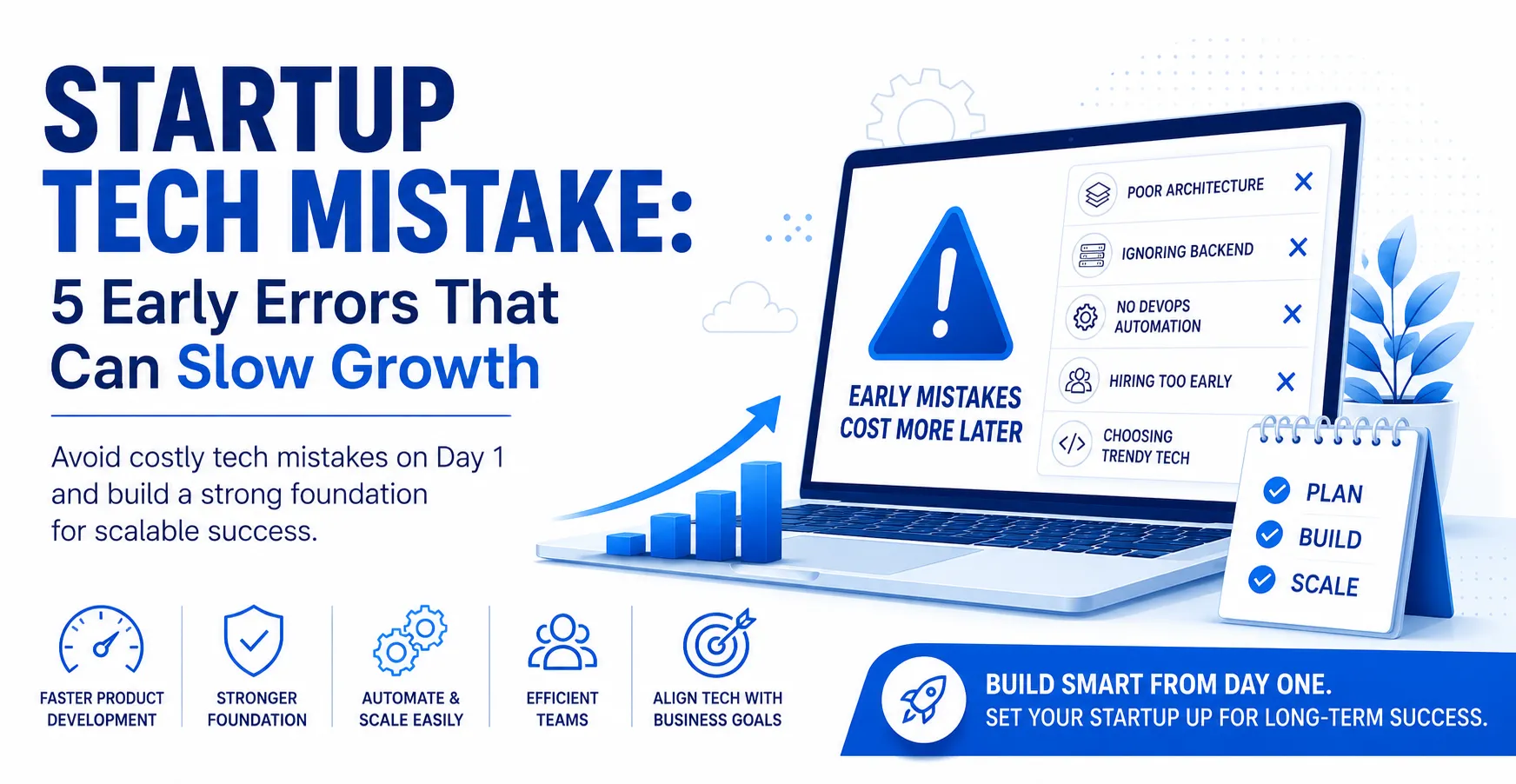
| Mistake | What Founders Think | Reality |
|---|---|---|
| Prioritizing Speed Over Structure | “We’ll fix it later” | Fixing later is expensive and slow |
| Hiring Too Early | “We need a full team now” | Overhiring creates inefficiency |
| Ignoring Backend | “Frontend is what users see” | Backend determines performance |
| Choosing Trendy Tech | “This is the latest stack” | Not always the right fit |
| No DevOps | “We’ll manage deployments manually” | Leads to delays and errors |
Each of these startup tech mistakes creates friction that grows with your business. What feels like a shortcut today becomes a bottleneck tomorrow.
Mistake #1: Confusing Speed with Progress
One of the most common misconceptions is that moving fast automatically means making progress. Founders often rush development without setting up proper systems, believing they can optimize later. While this may work in the short term, it creates a cycle of inefficiency.
Without structured workflows, clear ownership, and scalable architecture, your team spends more time fixing problems than building new features. True speed comes from systems that enable consistent execution, not from cutting corners. Avoiding this startup tech mistake requires balancing speed with structure from the beginning.
Mistake #2: Building a Team Instead of a System
Many founders believe that hiring more developers will solve their tech challenges. This leads to overhiring, where multiple people are brought in without clear roles or processes. Instead of improving output, this often results in confusion, misalignment, and slower execution.
The smarter approach is to build systems first and then add people as needed. A well-structured system allows a smaller team to achieve more, while a poorly structured team struggles regardless of size. This is why focusing on systems over headcount is critical to avoiding early startup tech mistakes.
Mistake #3: Ignoring the Backend
The backend is often overlooked because it’s not visible to users. Founders prioritize frontend design and user experience, assuming that the backend can be optimized later. However, the backend is what determines performance, scalability, and reliability.
When the backend is poorly designed, even small increases in traffic can cause slowdowns or crashes. Fixing these issues later is far more complex than building a strong foundation from the start. This is one of the most damaging startup tech mistakes, as it directly impacts user experience and growth.
Mistake #4: Lack of DevOps and Automation
Another critical mistake is neglecting DevOps practices. Many startups rely on manual processes for deployment, testing, and monitoring, which slows down execution and increases the risk of errors. As the product grows, these manual processes become unsustainable.
Automation is not a luxury—it’s a necessity for scaling. By implementing DevOps practices early, you can streamline workflows, reduce errors, and improve efficiency. Avoiding this startup tech mistake ensures that your team can maintain speed as your business grows.
Mistake #5: Choosing Tools Over Strategy
Founders often get caught up in choosing the “perfect” tech stack, focusing on tools rather than strategy. While tools are important, they are only effective when aligned with your business goals and processes. A great tool used incorrectly can be more harmful than a simple tool used effectively.
The key is to focus on how your technology supports your workflow, scalability, and long-term vision. This shift in perspective helps you avoid unnecessary complexity and ensures that your tech decisions are driven by strategy rather than trends.
The Real Cost of Startup Tech Mistakes
The impact of early tech mistakes goes beyond technical challenges. They affect every aspect of your business, from product development to customer experience and revenue growth.
Business Impact of Tech Mistakes
- Slower Product Development: Teams spend more time fixing issues than building
- Higher Costs: Inefficiencies lead to increased spending
- Poor User Experience: Bugs and delays frustrate users
- Limited Scalability: Systems struggle to handle growth
- Team Burnout: Constant firefighting reduces morale
These consequences highlight why avoiding startup tech mistakes is essential for long-term success.
What Founders Should Do Instead
Avoiding mistakes is not about perfection—it’s about making informed decisions. By focusing on structure, scalability, and efficiency, you can build a strong foundation for your startup.
Best Practices for Day 1
- Design for Scalability
Even if you start small, ensure your systems can handle growth. - Prioritize Backend Stability
Build a reliable foundation before adding complexity. - Implement DevOps Early
Automate processes to maintain speed and consistency. - Focus on Systems, Not Just People
Create workflows that enable efficient execution. - Align Tech with Business Goals
Ensure every decision supports your long-term vision.
Why Getting It Right Early Changes Everything
When you avoid early startup tech mistakes, you create a foundation that supports growth rather than limiting it. Your team can move faster, your product performs better, and your business can scale without constant disruption.
This proactive approach also gives you a competitive advantage. While other startups struggle with inefficiencies, you can focus on innovation and growth, positioning your business for long-term success.
Conclusion: Build Smart from Day One
Technology decisions made on day one have a lasting impact on your startup. While it’s tempting to prioritize speed and shortcuts, these choices often lead to challenges that slow you down later. By understanding and avoiding common startup tech mistakes, you can build a system that supports your vision and enables sustainable growth.
The goal is not just to launch quickly—it’s to build something that lasts. When your tech foundation is strong, everything else becomes easier.
Ready to Avoid Costly Mistakes?
If you want to ensure your startup is built on a strong foundation, now is the time to take action. A structured approach to technology can save you time, money, and frustration in the long run.
👉 Get a tech strategy audit and discover how to eliminate inefficiencies, optimize your systems, and set your startup up for success.