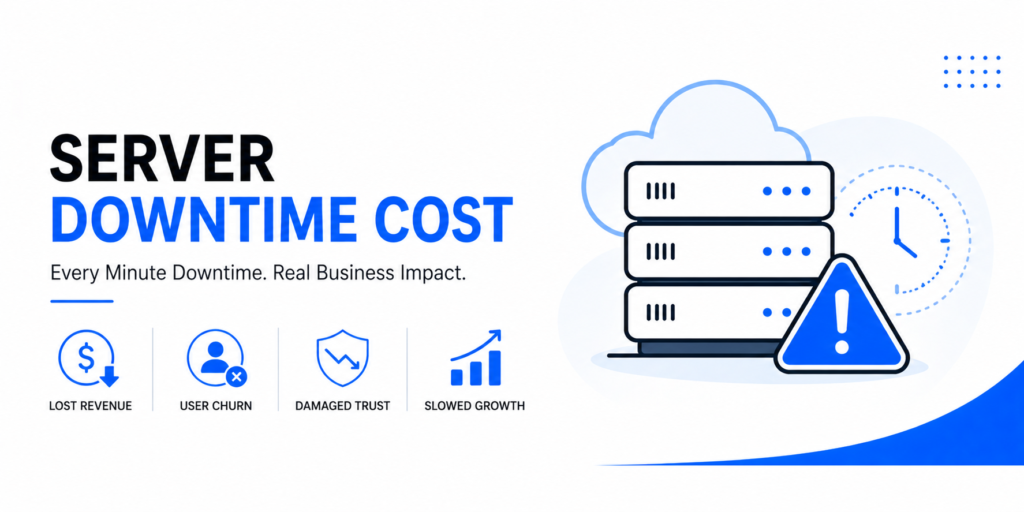
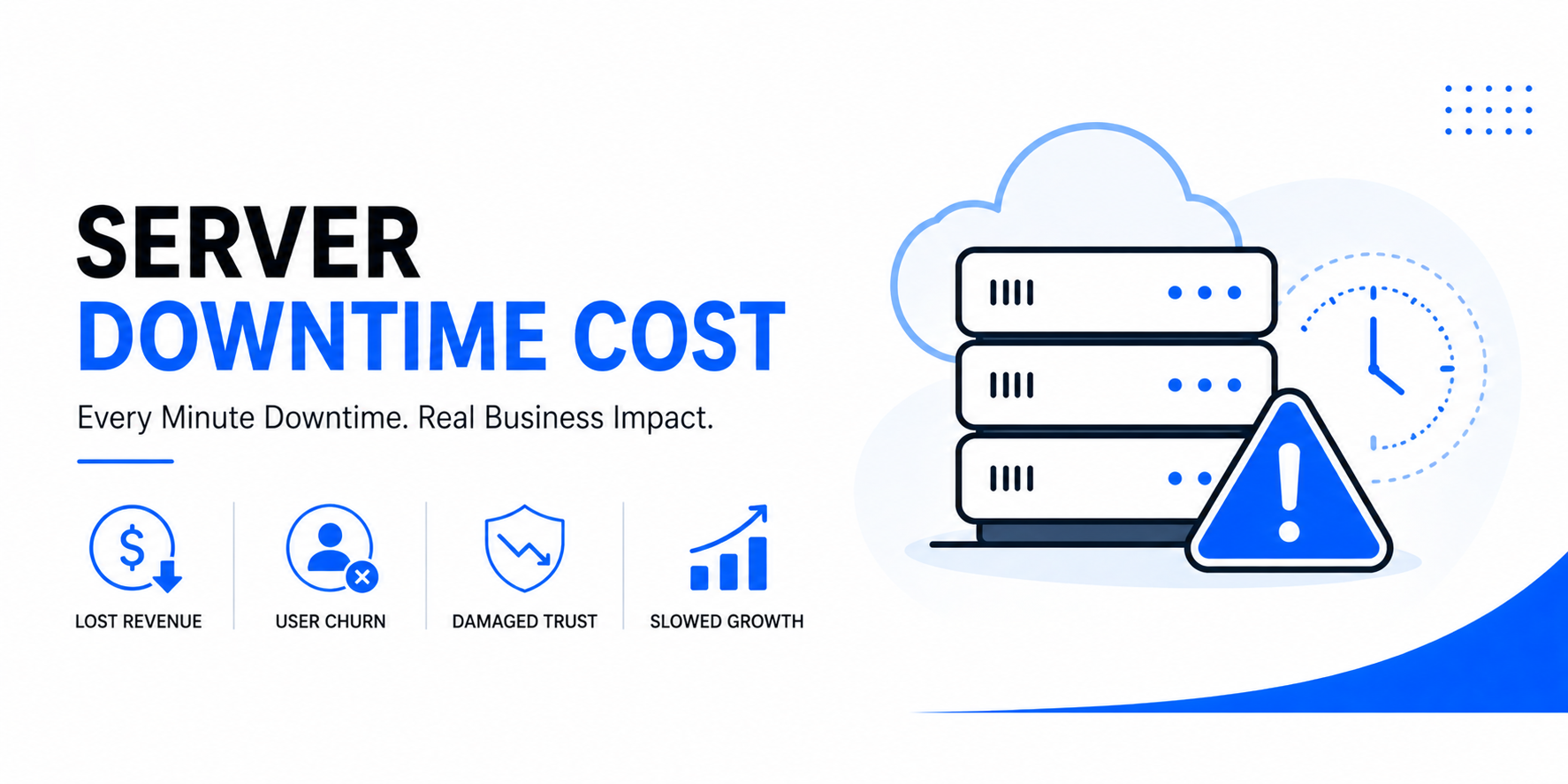
Downtime is often treated as a temporary inconvenience—something that happens occasionally and gets resolved quickly. But in reality, downtime is far more than a technical issue. For digital products, every minute your system is unavailable translates into lost revenue, damaged trust, and missed growth opportunities. Understanding the true server downtime cost is essential if you want to build a reliable and scalable business.
What Is Server Downtime?
Server downtime occurs when your system becomes unavailable to users. During this time:
- Users cannot access your product
- Transactions cannot be completed
- Features and services stop working
Downtime can be caused by:
- Server crashes
- Infrastructure failures
- Deployment errors
- Traffic spikes
While it may seem temporary, the impact of downtime extends far beyond the duration of the outage.
The Immediate Financial Impact
The most obvious effect of downtime is lost revenue.
When your system is unavailable:
- Users cannot complete purchases
- Transactions are interrupted
- Opportunities are lost
Revenue Loss Breakdown
| Factor | Impact |
|---|---|
| Missed Transactions | Direct revenue loss |
| Abandoned Users | Reduced conversions |
| Delayed Payments | Cash flow disruption |
| Refunds & Compensation | Additional costs |
Even short periods of downtime can result in significant financial loss—especially during peak usage.
The Hidden Costs of Downtime
The visible losses are only part of the picture. The hidden costs often have a much deeper and longer-lasting impact.
Hidden Costs
- User Churn
Frustrated users may leave permanently - Reputation Damage
Trust takes time to build—and seconds to lose - Support Overload
Increased complaints and support tickets - Operational Disruption
Teams shift from building to firefighting
These factors compound over time, increasing the overall server downtime cost far beyond initial estimates.
The Impact on User Trust
Trust is one of the most valuable assets any product has.
Users expect:
- Consistent access
- Reliable performance
- Secure interactions
Downtime breaks this expectation. Even a single outage can create doubt about your system’s reliability.
Once trust is damaged, it becomes harder to:
- Retain users
- Acquire new customers
- Maintain brand credibility
This makes trust loss one of the most critical components of server downtime cost.
How Downtime Slows Growth
Downtime doesn’t just affect current operations—it directly impacts future growth.
Growth Impact
| Area | Effect of Downtime |
|---|---|
| User Acquisition | Lower conversion rates |
| Retention | Increased churn |
| Brand Perception | Negative reputation |
| Competitive Position | Loss of market share |
If your system is unreliable, growth becomes unpredictable and difficult to sustain.
Why Downtime Happens
Downtime is rarely random. It usually stems from underlying issues in your system.
Common Causes
- Infrastructure Failures
Hardware or cloud service disruptions - Poor Scalability
Systems unable to handle increased load - Deployment Errors
Bugs introduced during updates - Lack of Monitoring
Issues go unnoticed until they escalate - Security Incidents
Attacks or vulnerabilities disrupting systems
Understanding these causes is the first step toward reducing server downtime cost.
The Role of Infrastructure in Preventing Downtime
A strong infrastructure is the foundation of system reliability.
Infrastructure Best Practices
| Practice | Benefit |
|---|---|
| Load Balancing | Distributes traffic evenly |
| Auto-Scaling | Handles traffic spikes |
| Redundancy | Backup systems reduce failure risk |
| Distributed Systems | Avoid single points of failure |
These practices ensure that your system remains stable even under pressure.
The Importance of Monitoring and Alerts
One of the biggest reasons downtime becomes costly is delayed response.
Without proper monitoring:
- Issues go undetected
- Downtime lasts longer
- Impact increases
Monitoring Benefits
- Real-time performance tracking
- Instant alerts for issues
- Faster incident response
- Reduced downtime duration
Proactive monitoring significantly reduces overall server downtime cost.
How DevOps Reduces Downtime
DevOps practices play a critical role in maintaining system reliability.
DevOps Benefits
- Automated Testing
Detect issues before deployment - Continuous Deployment
Safer and faster releases - Proactive Monitoring
Identify problems early - Quick Rollbacks
Minimize impact of failures
By implementing DevOps, teams can reduce both the frequency and severity of downtime.
Calculating the True Server Downtime Cost
To fully understand downtime, you need to consider both direct and indirect costs.
Cost Calculation Factors
| Factor | Description |
|---|---|
| Revenue Loss | Missed transactions |
| Customer Churn | Lost users |
| Recovery Costs | Fixing issues |
| Brand Damage | Long-term trust loss |
When combined, these factors reveal the true impact of downtime on your business.
How to Minimize Downtime
Reducing downtime requires a proactive, system-level approach.
Steps to Reduce Downtime
1. Invest in Reliable Infrastructure
Use cloud systems with high availability.
2. Implement Monitoring Tools
Track performance and detect issues early.
3. Adopt DevOps Practices
Automate testing and deployment.
4. Design for Scalability
Ensure your system can handle growth.
5. Conduct Regular Testing
Identify weaknesses before failures occur.
These steps help reduce both the frequency and impact of downtime.
Why Downtime Is More Expensive Than You Think
The true server downtime cost is not measured in minutes—it’s measured in:
- Lost opportunities
- Damaged relationships
- Slowed growth
What seems like a small outage can create long-term consequences that affect your entire business.
Key Takeaways
- Downtime impacts revenue, trust, and growth
- Hidden costs often exceed direct financial losses
- Infrastructure and monitoring are critical for prevention
- DevOps practices reduce risk and improve reliability
- Proactive planning minimizes long-term impact
Conclusion: Reliability Is a Business Strategy
Downtime is not just a technical issue—it’s a business problem.
A reliable system:
- Protects revenue
- Builds trust
- Enables growth
By understanding and addressing server downtime cost, you can create a product that users depend on—and a business that scales confidently.
🚀 Ready to Reduce Downtime Risk?
If your system is experiencing instability or performance issues, now is the time to act.
With the right approach, you can:
- Minimize downtime
- Improve reliability
- Protect your growth
Start by evaluating your infrastructure and take the first step toward building a system that stays online when it matters most.