Engineering firms rarely think of themselves as technology companies.
Yet every project timeline, CAD file, client approval, compliance document, remote collaboration workflow, and design revision depends on technology working without interruption.
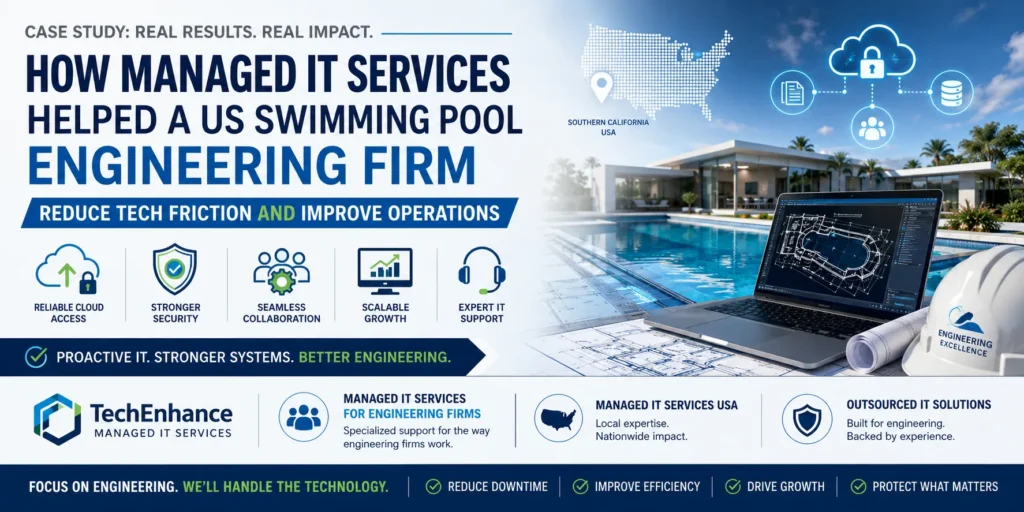
For one Southern California swimming pool engineering company, growth started exposing hidden operational issues: fragmented systems, IT inefficiencies, and infrastructure that struggled to keep pace.
This case study explores how managed IT services helped streamline operations, support scalability, and create a more resilient technology environment. The original project involved a US-based swimming pool engineering firm specializing in structural and engineering design services. (TechEnhance)
About the Client
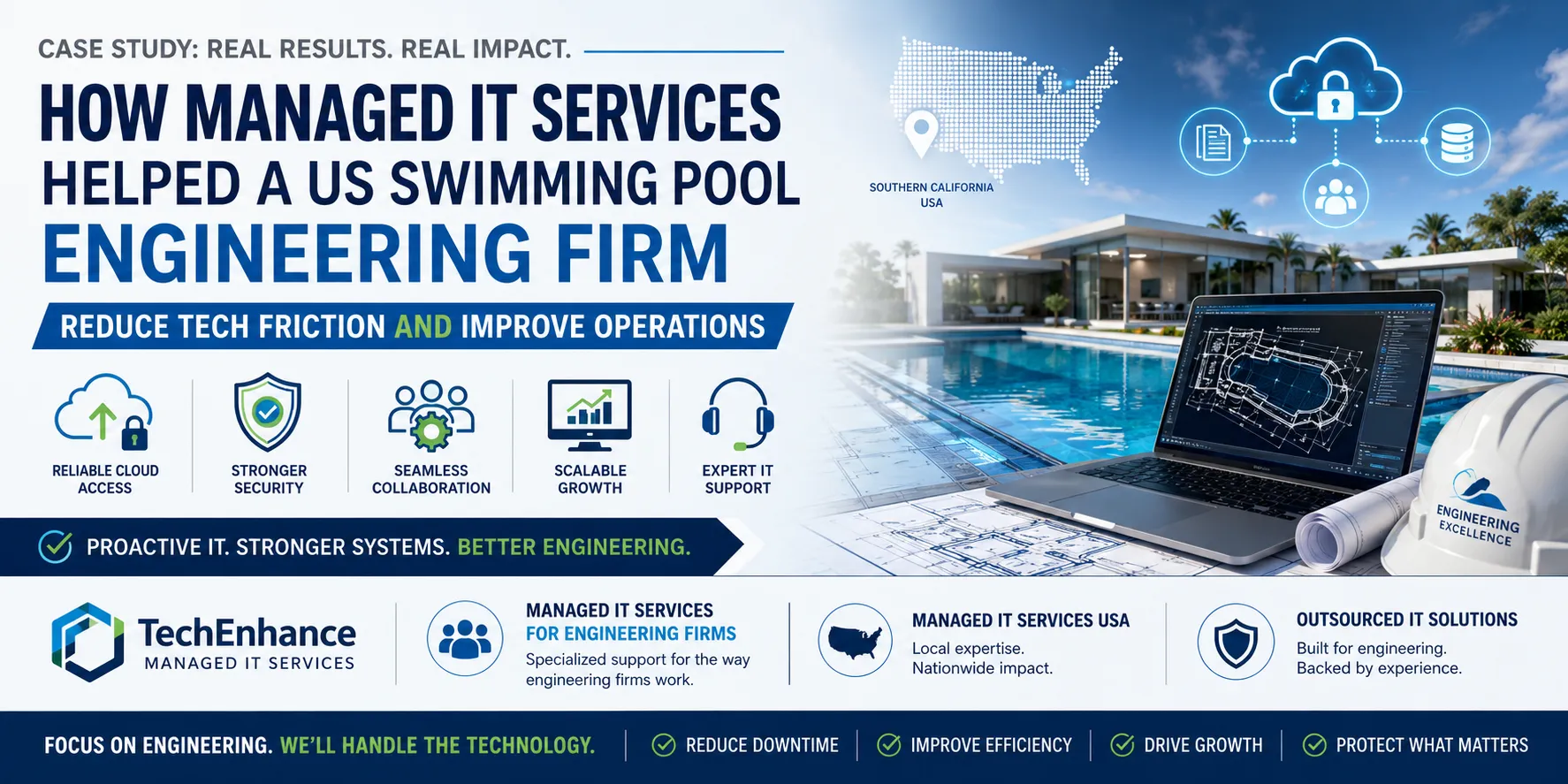
The client was a Southern California-based swimming pool engineering firm delivering engineering solutions for residential and commercial aquatic construction projects. Their work involved:
- Structural engineering
- Pool design documentation
- Compliance workflows
- Project collaboration
- Engineering software usage
- File management and approvals
As projects increased, internal systems became harder to maintain efficiently. (TechEnhance)
The Challenge: When Engineering Growth Creates IT Bottlenecks
Engineering businesses often encounter similar problems:
1. Large Design Files Slow Teams Down
Pool engineering projects generate heavy documentation:
- AutoCAD files
- Structural calculations
- Permits
- Revisions
- Client records
Without optimized infrastructure, collaboration becomes slower.
2. Downtime Interrupts Billable Work
When systems fail, engineers stop designing.
Every hour lost impacts:
- Project deadlines
- Contractor coordination
- Client communication
- Revenue generation
3. Security Risks Increase
Engineering firms store sensitive project information.
Weak IT systems increase risks around:
- Unauthorized access
- Data loss
- Compliance issues
- Backup failures
4. Scaling Becomes Difficult
Hiring more engineers doesn’t automatically solve operational inefficiencies.
Legacy systems often become the hidden bottleneck.
Why Swimming Pool Engineering Firms Need Specialized Managed IT Services
Pool engineering firms sit between construction, architecture, and consulting.
That means IT requirements are different from typical businesses.
They often require:
✓ Reliable cloud access to project files
✓ Backup and disaster recovery systems
✓ Remote collaboration tools
✓ CAD and engineering software support
✓ Secure document storage
✓ Performance monitoring
✓ Ongoing technical support
Generic IT support frequently misses these needs.
The Solution: Managed IT Services Designed Around Operational Continuity
The engagement focused on building a more stable and scalable technology environment rather than reacting to issues after failures occurred.
According to TechEnhance, their managed service approach typically includes:
- Infrastructure monitoring
- Cloud optimization
- Security management
- Ongoing technical support
- System maintenance
- Performance improvements
- Scalability planning (TechEnhance)
For engineering firms, proactive support often matters more than emergency fixes.
Key Improvements Implemented
1. Better System Reliability
Reducing unexpected disruptions allowed engineering teams to focus on project delivery rather than troubleshooting.
Outcome:
- Fewer interruptions
- Improved workflow continuity
- Higher operational consistency
- Stronger Data Security Measures
Engineering projects contain sensitive information.
Improved management practices help support:
- Secure storage
- Controlled access
- Backup systems
- Reduced vulnerability exposure
TechEnhance states they follow secure architectures and compliance-focused processes in service delivery. (TechEnhance)
- Improved Scalability
The objective wasn’t simply fixing current problems.
The goal was preparing infrastructure for future growth.
As engineering firms expand:
More employees → More projects → More software → More data → Higher infrastructure demands
Scalable systems prevent growth from becoming operational chaos.
- Ongoing Technical Support
Instead of solving issues internally, businesses gain continuous support resources.
That means engineers spend more time engineering.
Results: Operational Efficiency Over Reactive IT
The measurable value of managed IT services is rarely flashy.
It usually appears as:
- Faster workflows
- Reduced downtime
- Better collaboration
- More predictable operations
- Lower long-term infrastructure risk
- Improved project delivery consistency
For engineering companies, those improvements compound over years.
What Other US Engineering Firms Can Learn From This Case
Whether your company specializes in:
- Swimming pool engineering
- Civil engineering
- Structural engineering
- MEP engineering
- Architecture
- Construction consulting
The pattern remains similar:
Growth eventually exposes weak technology foundations.
Waiting until systems fail becomes expensive.
Proactive managed IT support often costs less than recurring downtime.
Signs Your Engineering Firm May Need Managed IT Services
You may benefit from outsourced IT support if:
✓ Teams struggle accessing shared files
✓ Remote collaboration feels slow
✓ Downtime impacts deadlines
✓ Backups are inconsistent
✓ Security concerns keep increasing
✓ Software performance slows projects
✓ Internal staff handle too much troubleshooting
Final Thoughts
Engineering firms compete on expertise, precision, and delivery speed.
Technology quietly influences all three.
This case involving a US swimming pool engineering company highlights a broader lesson: managed IT services are increasingly becoming operational infrastructure—not optional support. The original case describes a Southern California swimming pool engineering business receiving managed IT support to improve technology operations. (TechEnhance)
For firms aiming to scale while protecting efficiency, investing in reliable IT systems may become as important as hiring additional engineers.