
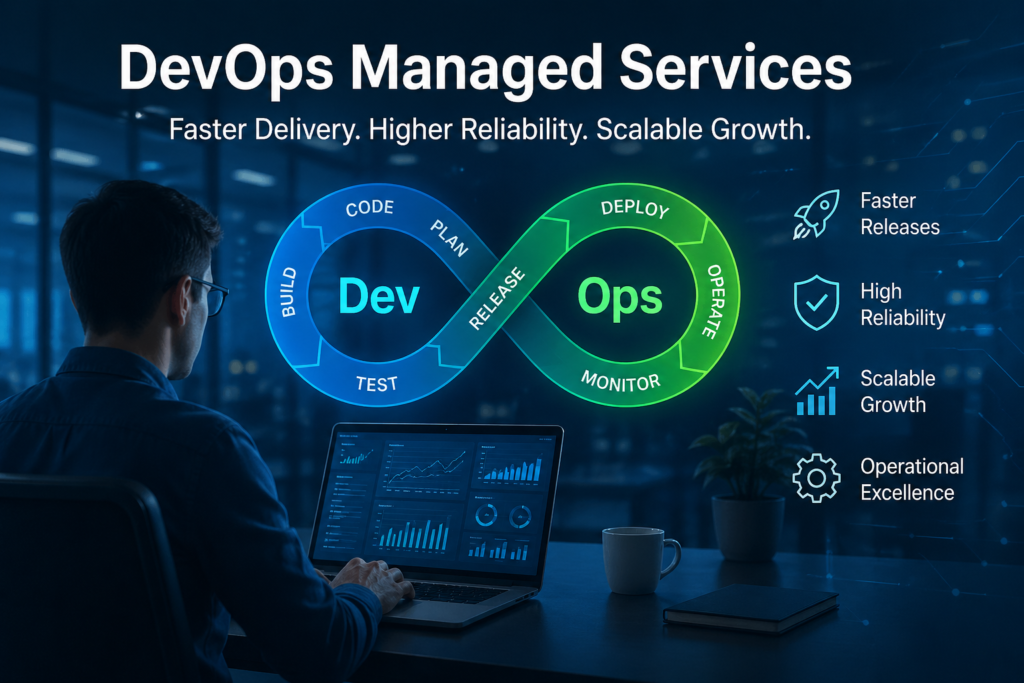
For many founders, DevOps feels like a technical buzzword—something relevant to engineers but distant from business decisions. It’s often misunderstood as a set of tools or a specialized role within the tech team. But in reality, DevOps is not just a technical function; it’s a business enabler. It directly impacts how fast you can build, ship, and scale your product. This is why devops managed services have become essential for modern startups and platforms that operate in high-performance, high-reliability environments.
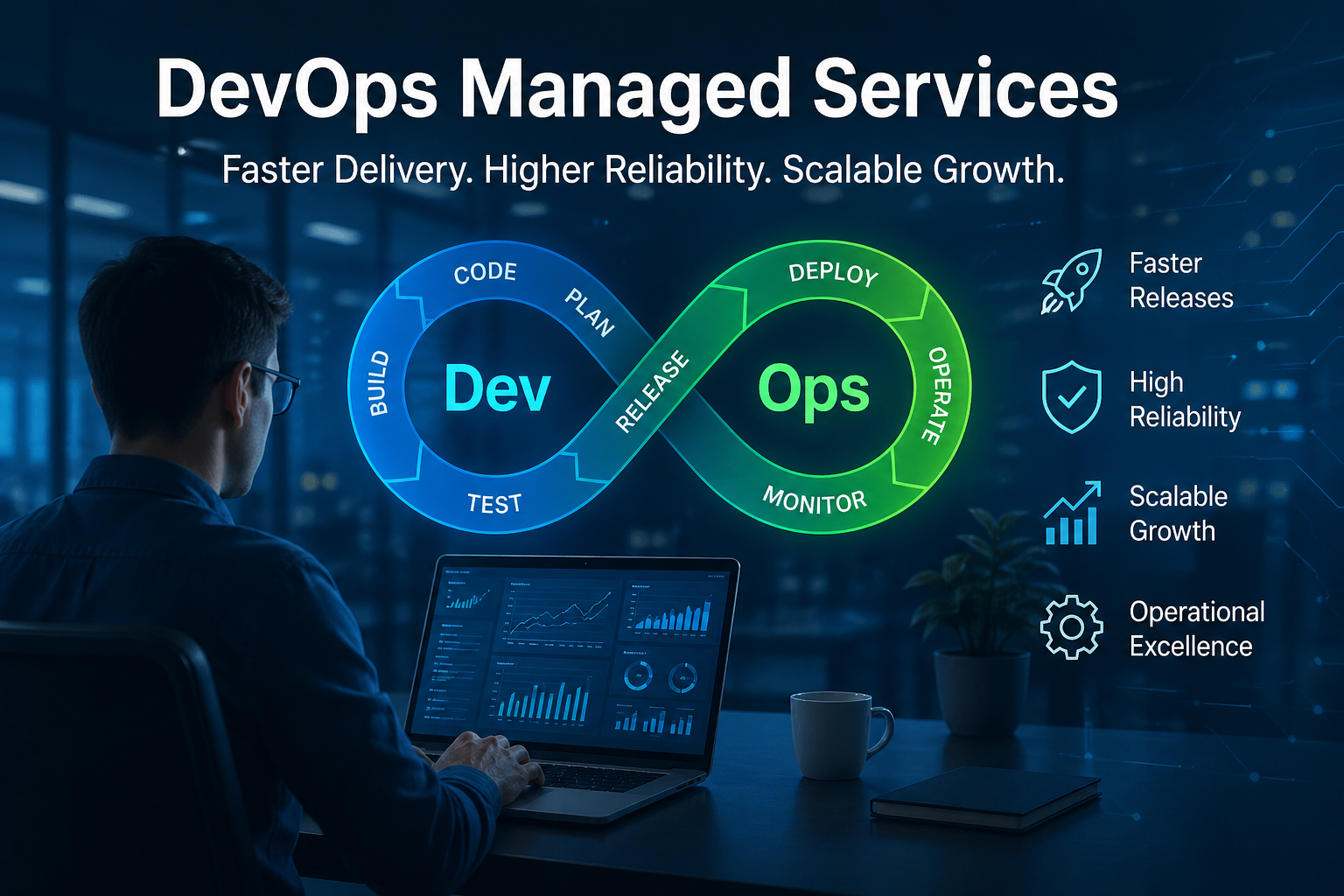
What DevOps Actually Means (In Simple Terms)
DevOps is the practice of bringing development (Dev) and operations (Ops) together into a single, streamlined workflow. Instead of treating coding, testing, deployment, and infrastructure as separate processes handled by different teams, DevOps integrates them into a continuous cycle.
For founders, this means one thing: faster and more reliable execution. When DevOps is implemented correctly, your team can ship features quickly, fix issues efficiently, and maintain system stability even as your product grows.
Why Founders Should Care About DevOps
At first glance, DevOps might seem like an internal technical concern. But its impact is felt across the entire business. Every delay in deployment, every system failure, and every inefficient workflow affects your ability to grow.
Platforms which deal with financial data, transactions, and user trust, cannot afford instability or delays. This is where devops managed services become critical. They ensure that the underlying systems are optimized for performance, reliability, and scalability.
The Business Impact of DevOps
DevOps is not just about improving engineering efficiency—it’s about driving business outcomes. When your systems are optimized, your entire organization benefits.
How DevOps Impacts Business
| Area | Without DevOps | With DevOps Managed Services |
|---|---|---|
| Product Releases | Slow and inconsistent | Fast and predictable |
| System Stability | Frequent issues | High reliability |
| Team Productivity | Reactive firefighting | Proactive execution |
| Customer Experience | Unstable performance | Seamless experience |
| Growth | Limited by tech | Enabled by systems |
For a platform, where trust and performance are critical, these improvements directly translate into better user retention and higher growth potential.
What DevOps Managed Services Include
DevOps managed services go beyond tools and automation. They provide a structured system that handles the entire lifecycle of your product—from development to deployment to monitoring.
Key Components
- Continuous Integration (CI): Automatically testing and integrating code changes
- Continuous Deployment (CD): Releasing updates quickly and reliably
- Infrastructure Management: Handling servers, cloud environments, and scaling
- Monitoring and Alerts: Detecting and resolving issues in real time
- Security and Compliance: Ensuring data protection and regulatory adherence
These components are essential to maintain the integrity and performance of its fintech platform.
Why Startups Struggle Without DevOps
Many startups delay implementing DevOps because they see it as complex or unnecessary in the early stages. Instead, they rely on manual processes and ad hoc workflows. While this may work initially, it quickly becomes a bottleneck as the product grows.
Without DevOps, teams face:
- Delayed deployments due to manual processes
- Increased risk of errors during releases
- Lack of visibility into system performance
- Difficulty scaling infrastructure
These challenges slow down execution and create friction across the organization. This is why adopting devops managed services early can give startups a significant advantage.
The Shift from Reactive to Proactive Systems
One of the biggest advantages of DevOps is the shift from reactive problem-solving to proactive system management. Instead of waiting for issues to occur, DevOps practices identify and address potential problems before they impact users.
Reactive vs Proactive Approach
| Approach | Characteristics | Outcome |
|---|---|---|
| Reactive | Fix issues after they occur | Frequent disruptions |
| Proactive | Prevent issues before they occur | Stable operations |
For founders, this shift means fewer surprises and more control over their product’s performance.
How DevOps Accelerates Growth
Growth is not just about acquiring users—it’s about supporting that growth with reliable systems. DevOps enables this by creating a foundation that can handle increased demand without breaking.
Growth Benefits
- Faster Time to Market: Launch features quickly
- Improved Scalability: Handle more users seamlessly
- Better Resource Utilization: Optimize costs and performance
- Enhanced Collaboration: Align teams for efficiency
For Finspring, these benefits are crucial to staying competitive in the fintech space.
When Should Founders Invest in DevOps?
The best time to invest in DevOps is earlier than most founders think. Waiting until problems arise often leads to rushed implementations and higher costs.
Signs You Need DevOps Managed Services
- Your releases are becoming slower
- You experience frequent bugs or downtime
- Your team spends more time fixing than building
- Scaling infrastructure feels difficult
- You lack visibility into system performance
If any of these apply, it’s time to consider devops managed services as a strategic investment.
Why Managed Services Are the Smart Choice
Building DevOps capabilities in-house can be time-consuming and expensive. It requires hiring specialized talent, setting up tools, and creating processes from scratch. For many startups, this is not practical.
DevOps managed services provide a faster and more efficient alternative. They offer:
- Pre-built systems and workflows
- Experienced teams handling operations
- Reduced setup time
- Predictable costs
This allows founders to focus on their core business while ensuring their tech infrastructure is optimized.
Conclusion: DevOps Is a Growth Engine
DevOps is not just a technical concept—it’s a growth engine. It enables faster execution, improves reliability, and supports scalability. For founders, understanding and implementing DevOps is essential to building a successful product.
In the context of Finspring, where performance and trust are critical, devops managed services play a key role in ensuring smooth operations and sustained growth. By investing in the right systems early, founders can avoid bottlenecks and create a strong foundation for the future.
🚀 Ready to Optimize Your DevOps?
If you want to move faster, scale efficiently, and build a reliable product, it’s time to rethink your approach to DevOps. With the right devops managed services, you can transform your execution and unlock new growth opportunities.
👉 Get a DevOps audit and discover how to streamline your workflows, improve performance, and scale with confidence.