
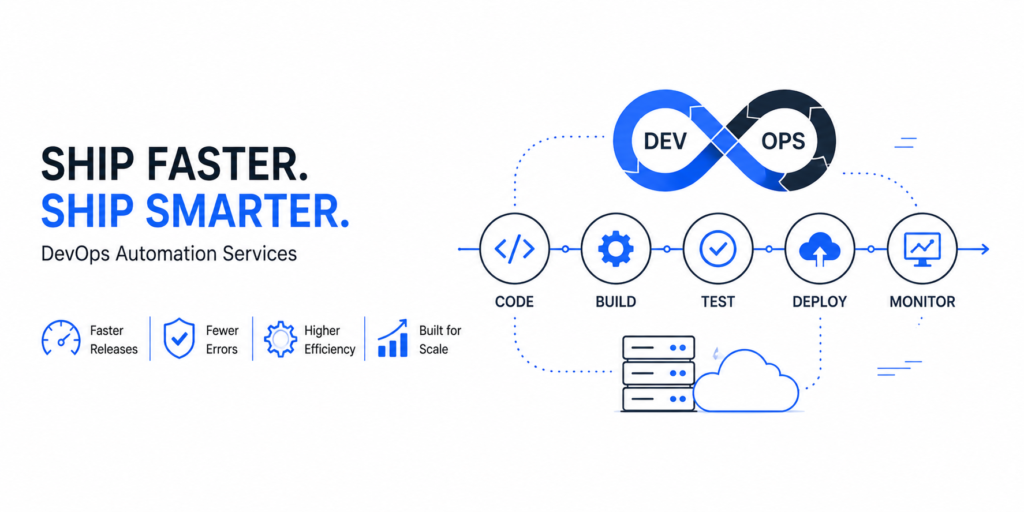
In fast-moving markets, the speed at which you release updates can determine whether you lead or fall behind. For growing businesses, shipping features quickly isn’t just about efficiency—it’s about survival. Yet many teams find themselves stuck in slow, error-prone release cycles. Updates take days instead of hours. Deployments fail unexpectedly. Bugs slip into production. The problem isn’t lack of talent. It’s the absence of systems. This is where devops automation services transform how products are built, tested, and deployed—turning chaotic release cycles into smooth, predictable workflows.
Why Product Releases Slow Down Over Time
In the early stages, releasing updates feels simple. A developer writes code, tests it, and pushes it live.
But as your product grows, complexity increases:
- More features create dependencies
- More users increase risk
- More data demands higher reliability
Without automation, every release involves manual steps:
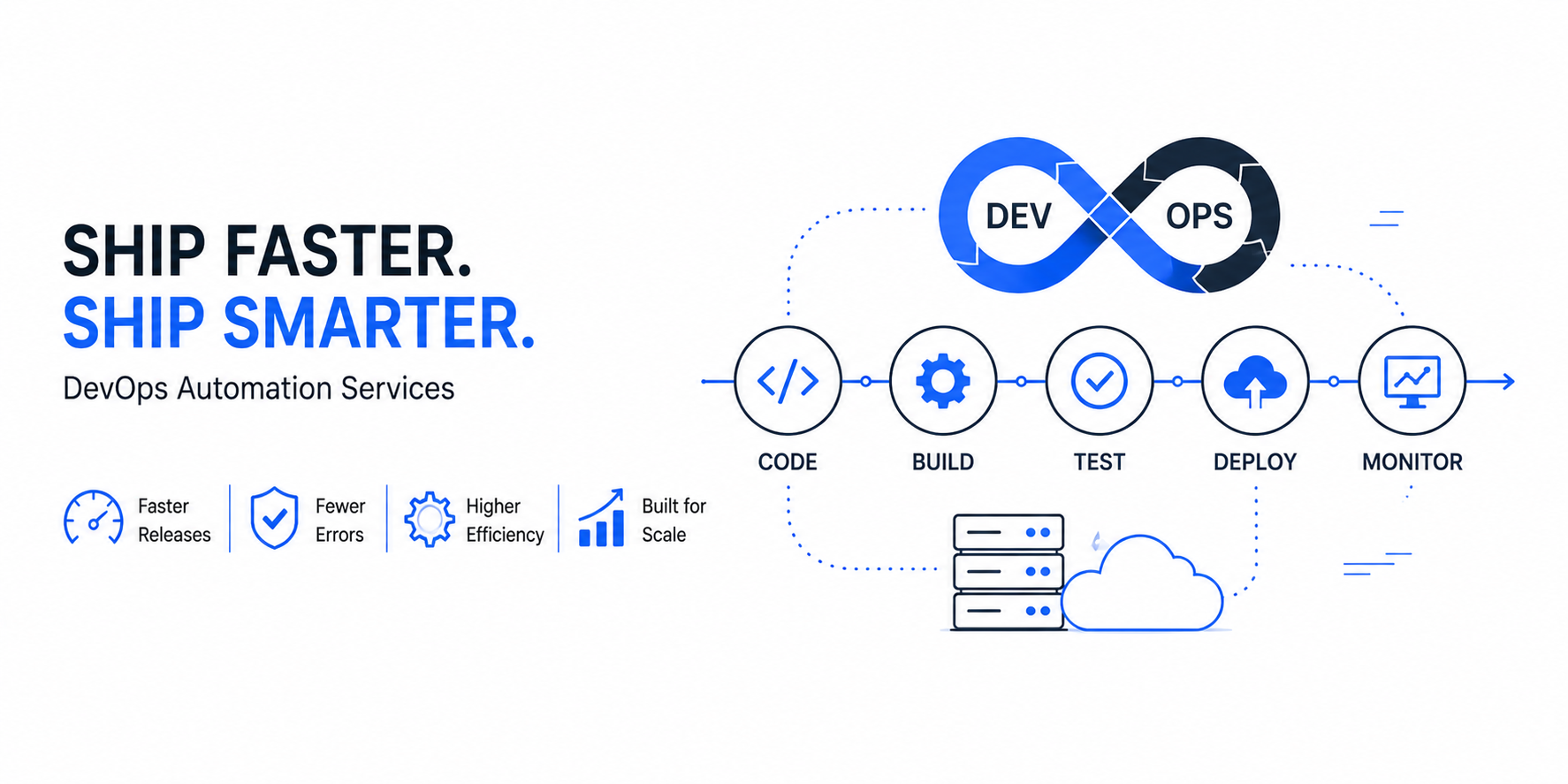
- Code integration
- Testing
- Deployment
- Monitoring
Each step adds friction. Over time, these delays compound, turning quick updates into slow, multi-step processes.
This is exactly the challenge that devops automation services are designed to solve.
What DevOps Automation Really Means
DevOps automation is about removing manual effort from repetitive and critical workflows.
Instead of relying on humans to execute every step, automated systems handle processes consistently and efficiently.
This includes:
- Automatically testing code
- Deploying updates without manual intervention
- Monitoring systems in real time
- Triggering alerts and rollbacks when needed
Devops automation services bring these capabilities together into a unified system, enabling faster and more reliable releases.
Where Automation Speeds Up Releases
Automation impacts every stage of the development lifecycle. Each stage becomes faster, more consistent, and less error-prone.
Key Areas of Automation
| Stage | Manual Process | Automated Process |
|---|---|---|
| Code Integration | Manual merging | Continuous Integration (CI) |
| Testing | Manual test cycles | Automated test execution |
| Deployment | Step-by-step release | Continuous Deployment (CD) |
| Monitoring | Reactive checks | Real-time alerts |
| Rollbacks | Complex fixes | Instant automated rollback |
By implementing devops automation services, teams eliminate bottlenecks and dramatically reduce release times.
CI/CD: The Backbone of Fast Releases
Continuous Integration (CI) and Continuous Deployment (CD) are at the core of DevOps automation.
- CI (Continuous Integration) ensures that code changes are automatically tested and merged.
- CD (Continuous Deployment) ensures that tested code is released to production instantly.
Together, they create a seamless pipeline where updates move from development to production without delays.
This allows teams to:
- Release features multiple times a day
- Fix bugs instantly
- Maintain consistent quality
Without CI/CD, speed is limited. With it, speed becomes a system.
How Automation Reduces Errors
Manual processes are inherently risky. A missed step or incorrect configuration can cause deployment failures.
Automation removes this uncertainty by standardizing workflows.
Error Reduction Benefits
- Consistent Execution
Every deployment follows the same process - Automated Testing
Bugs are caught before release - Reliable Deployments
Fewer failures during production - Quick Recovery
Instant rollback when issues occur
With devops automation services, releases become both faster and safer.
The Productivity Advantage
One of the biggest benefits of automation is improved team productivity.
Without automation, developers spend time on:
- Manual testing
- Deployment tasks
- Debugging production issues
With automation, these tasks are handled by systems.
Productivity Comparison
| Activity | Without Automation | With Automation |
|---|---|---|
| Testing | Time-consuming | Instant |
| Deployment | Manual | Automated |
| Debugging | Reactive | Proactive |
| Development | Interrupted | Focused |
This allows teams to focus on building features instead of managing infrastructure.
From Reactive to Proactive Systems
Without automation, teams operate reactively—fixing issues after they occur.
Automation shifts this approach to proactive management.
Reactive vs Proactive
| Approach | Characteristics | Outcome |
|---|---|---|
| Reactive | Manual fixes, delayed responses | Frequent disruptions |
| Proactive | Automated monitoring and alerts | Stable operations |
Devops automation services enable systems to detect and resolve issues before they impact users.
How Automation Supports Scaling
As your product grows, your infrastructure becomes more complex.
Without automation:
- More users = more manual work
- More features = more risk
- More traffic = more instability
Automation ensures that your processes scale alongside your product.
With devops automation services, you can:
- Handle higher traffic without slowdowns
- Maintain performance under load
- Release updates without increasing complexity
Scaling becomes smooth instead of chaotic.
Steps to Implement DevOps Automation
Adopting automation doesn’t have to be overwhelming. A structured approach can help you transition effectively.
Implementation Roadmap
1. Assess Current Processes
Identify bottlenecks and manual workflows.
2. Introduce CI/CD Pipelines
Automate code integration and deployment.
3. Implement Automated Testing
Ensure quality at every stage.
4. Set Up Monitoring Systems
Track performance in real time.
5. Optimize Infrastructure
Ensure systems can scale efficiently.
6. Adopt DevOps Automation Services
Leverage external expertise to accelerate implementation.
This approach creates a strong foundation for long-term efficiency.
Why Managed DevOps Automation Services Make Sense
Building automation systems internally requires:
- Specialized expertise
- Time investment
- Continuous maintenance
For many teams, this is not practical.
Devops automation services provide a faster, more efficient alternative.
Benefits of Managed Services
- Faster Setup
No need to build systems from scratch - Expert Guidance
Proven workflows and best practices - Cost Efficiency
Avoid hiring multiple specialists - Scalability
Systems grow with your needs
Managed services allow you to implement automation quickly while focusing on your core product.
Common Mistakes to Avoid
While adopting automation, many teams make avoidable mistakes:
- Automating without fixing underlying architecture
- Overcomplicating pipelines
- Ignoring monitoring and observability
- Delaying automation until systems become unstable
Avoiding these mistakes ensures that devops automation services deliver maximum impact.
Key Takeaways
- Speed in releases comes from systems, not effort
- Automation reduces both time and errors
- CI/CD is essential for consistent delivery
- Productivity increases when manual work decreases
- Managed services accelerate implementation
These insights highlight why automation is no longer optional—it’s essential.
Conclusion: Build Systems That Ship for You
Shipping faster isn’t about pushing teams harder. It’s about removing friction from your processes.
Devops automation services transform your release cycle by:
- Eliminating manual bottlenecks
- Reducing errors
- Enabling consistent execution
The result is a system that ships updates quickly, reliably, and at scale.
Ready to Accelerate Your Releases?
If your release cycles are slowing you down, automation is the next step.
With the right devops automation services, you can:
- Ship faster
- Reduce deployment risks
- Scale with confidence
Start by evaluating your current workflows and take the first step toward building a system that works at your speed.