When building a product, most founders focus on visible expenses—hiring developers, designing features, and launching quickly. But one of the most underestimated costs is what happens after launch. That cost is backend infrastructure cost.
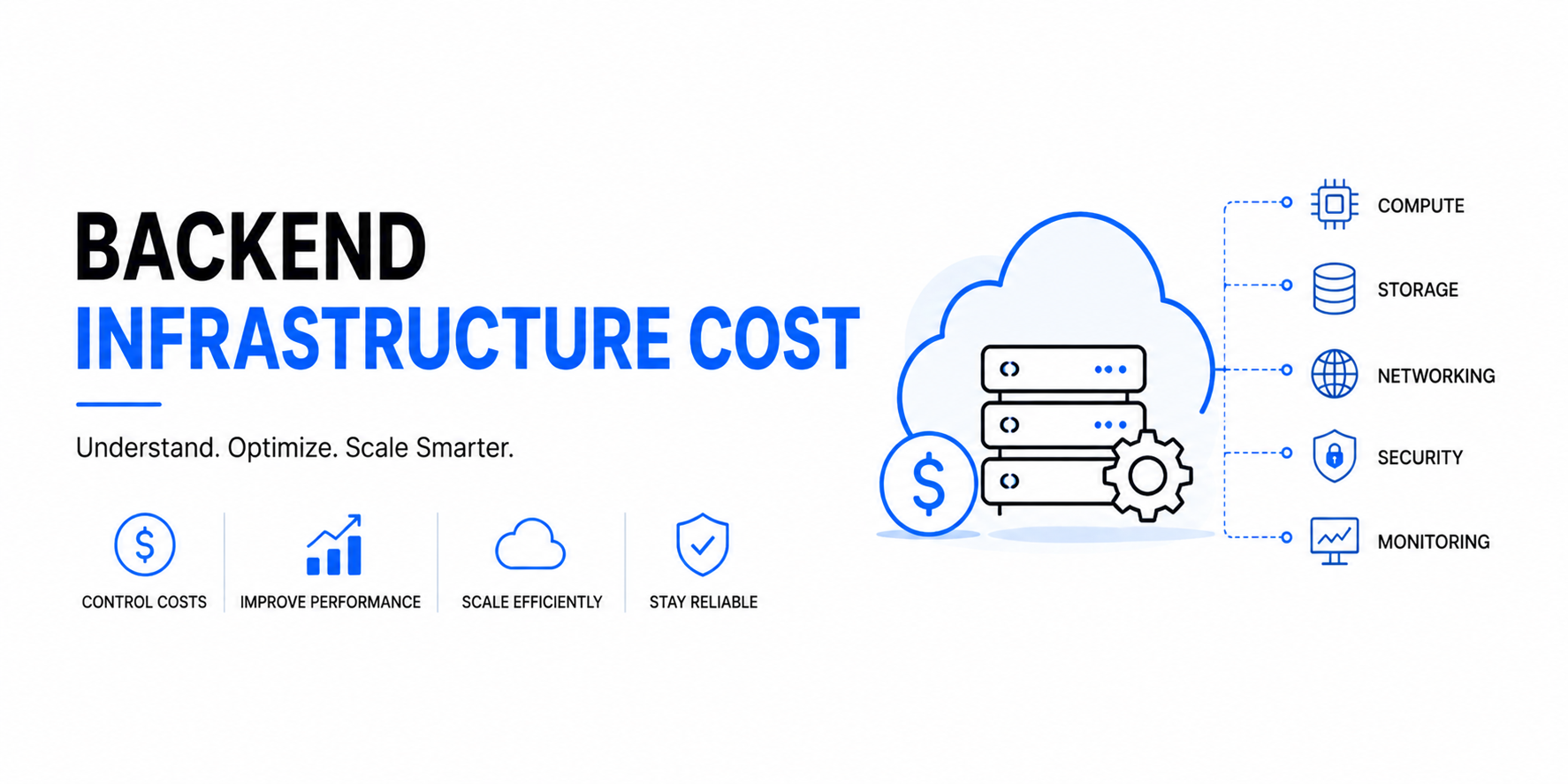
It’s the ongoing investment required to keep your product running, scaling, and performing reliably behind the scenes. And if you don’t understand it early, it can quietly become one of your biggest expenses.
What Is Backend Infrastructure Cost?
Backend infrastructure cost includes everything required to operate your product after development.
This includes:
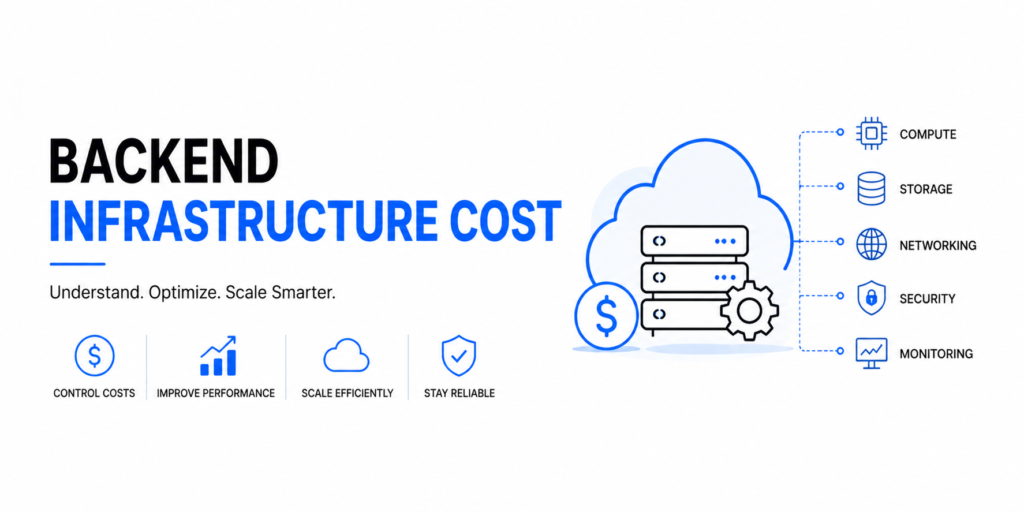
- Servers and compute resources
- Cloud infrastructure
- Databases and storage
- Networking and APIs
- Monitoring tools
- Security systems
- DevOps processes
In simple terms, it’s the cost of keeping your product:
- Fast
- Reliable
- Available
- Scalable
Why Backend Infrastructure Costs Are Often Underestimated
In the early stages, infrastructure costs seem small.
You might only need:
- A basic server
- Minimal storage
- Limited traffic handling
But as your product grows, complexity increases rapidly.
Why Costs Escalate
- More users → more compute power
- More data → more storage
- More features → more system complexity
- More traffic → higher networking costs
The key insight:
Infrastructure costs don’t grow linearly—they grow with complexity.
Without planning, backend infrastructure cost can quickly become unpredictable.
Key Components of Backend Infrastructure Cost
To understand total cost, break it down into core components.
Cost Breakdown
| Component | What It Covers | Cost Behavior |
|---|---|---|
| Compute | Servers, processing power | Scales with usage |
| Storage | Databases, files | Grows with data |
| Networking | Data transfer, APIs | Increases with traffic |
| DevOps | Deployment, automation | Ongoing cost |
| Monitoring | Performance tracking | Prevents larger losses |
| Security | Protection and compliance | Essential investment |
Each of these contributes to your total backend infrastructure cost.
Fixed vs Variable Costs
Not all infrastructure costs behave the same way.
Cost Types
| Type | Description | Example |
|---|---|---|
| Fixed Costs | Consistent monthly expenses | Base cloud subscriptions |
| Variable Costs | Scale with usage | Compute hours, data transfer |
Understanding this distinction helps you:
- Predict expenses
- Plan budgets
- Optimize spending
How Costs Increase as You Scale
Scaling is exciting—but it directly impacts infrastructure cost.
Scaling Impact
| Growth Factor | Cost Impact |
|---|---|
| More Users | Increased compute and storage |
| More Features | Higher maintenance and complexity |
| More Data | Larger database costs |
| Higher Traffic | Increased bandwidth usage |
Every layer of growth adds pressure to your backend systems—and increases cost.
Hidden Costs You Might Miss
Many teams focus only on visible infrastructure costs. But hidden costs often have a bigger impact.
Hidden Costs
- Downtime
Lost revenue and user trust - Maintenance
Time spent fixing issues - Security
Protection and compliance investments - Technical Debt
Inefficient systems increasing cost - Overprovisioning
Paying for unused resources
These hidden factors significantly increase total backend infrastructure cost over time.
In-House vs Managed Infrastructure
A key decision affecting cost is how you manage your infrastructure.
Comparison
| Factor | In-House | Managed Services |
|---|---|---|
| Setup Cost | High | Lower |
| Maintenance | Internal | External |
| Expertise | Requires hiring | Included |
| Scalability | Complex | Simplified |
| Cost Predictability | Variable | More stable |
Managed services often reduce complexity and make costs more predictable.
How Cloud Infrastructure Impacts Cost
Cloud platforms have transformed infrastructure pricing.
Instead of large upfront investments, you pay based on usage.
Cloud Advantages
- Pay-as-you-go
Only pay for what you use - Dynamic Scaling
Adjust resources instantly - Reduced Maintenance
Managed by providers
However, without optimization, cloud costs can grow quickly.
Monitoring and control are essential to manage backend infrastructure cost effectively.
How to Optimize Backend Infrastructure Cost
Reducing costs isn’t about cutting resources—it’s about improving efficiency.
Optimization Strategies
1. Right-Size Resources
Avoid overprovisioning servers and storage
2. Use Auto-Scaling
Match resources to real-time demand
3. Implement Caching
Reduce load on databases
4. Optimize Queries
Improve database performance
5. Monitor Usage
Track patterns and identify waste
These strategies help maintain performance while controlling costs.
The Cost of Poor Infrastructure Decisions
Bad decisions early on can lead to long-term inefficiencies.
Common Mistakes
- Choosing the wrong cloud provider
- Ignoring scalability requirements
- Delaying optimization
- Lack of monitoring
- Overcomplicating architecture
These mistakes increase both cost and complexity.
Why Infrastructure Is an Investment
While infrastructure may seem expensive, it directly impacts your product’s success.
Business Benefits
| Benefit | Impact |
|---|---|
| Better Performance | Improved user experience |
| Higher Reliability | Reduced downtime |
| Faster Development | Efficient workflows |
| Scalability | Supports growth |
A well-optimized backend infrastructure cost is not a burden—it’s a growth enabler.
Example Cost Distribution
While exact numbers vary, a typical cost structure might look like:
Example Breakdown
| Category | % of Total Cost |
|---|---|
| Compute | 30–40% |
| Storage | 20–30% |
| Networking | 10–20% |
| DevOps & Tools | 10–15% |
| Security | 10–15% |
This helps identify where optimization efforts should focus.
When Backend Infrastructure Cost Becomes a Problem
Costs become a concern when they outpace growth or reduce efficiency.
Warning Signs
- Rapid increase in monthly costs
- Difficulty predicting expenses
- Performance issues despite high spending
- Too much time spent managing infrastructure
These signals indicate it’s time to rethink your strategy.
Key Takeaways
- Backend infrastructure cost is an ongoing operational expense
- Costs grow with complexity, not just usage
- Hidden costs can significantly impact budgets
- Cloud systems offer flexibility but require optimization
- Efficient systems balance cost, performance, and scalability
Conclusion: Understand, Plan, Optimize
Your backend infrastructure is the foundation of your product. Managing its cost effectively is not optional—it’s essential.
By understanding backend infrastructure cost, you can:
- Avoid unexpected expenses
- Improve system performance
- Scale efficiently
The goal isn’t to spend less—it’s to spend smarter.
🚀 Ready to Optimize Your Infrastructure?
If your infrastructure costs feel unpredictable or too high, the solution lies in clarity and strategy.
With the right approach, you can:
- Reduce waste
- Improve efficiency
- Build a system that scales sustainably
Start by evaluating your current setup and take control of your backend infrastructure cost before it controls your growth.