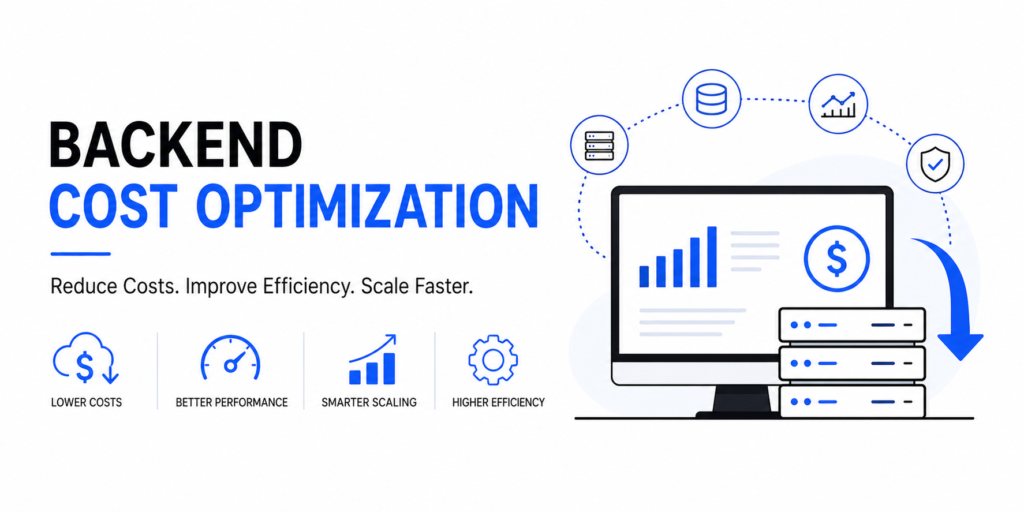
As digital products scale, backend costs tend to rise alongside them. More users mean more compute power, more data storage, and more infrastructure complexity. For many teams, this creates a difficult trade-off: control costs or continue scaling. But this trade-off is not inevitable. With the right approach to backend cost optimization, you can reduce infrastructure and operational expenses while maintaining performance and growth.
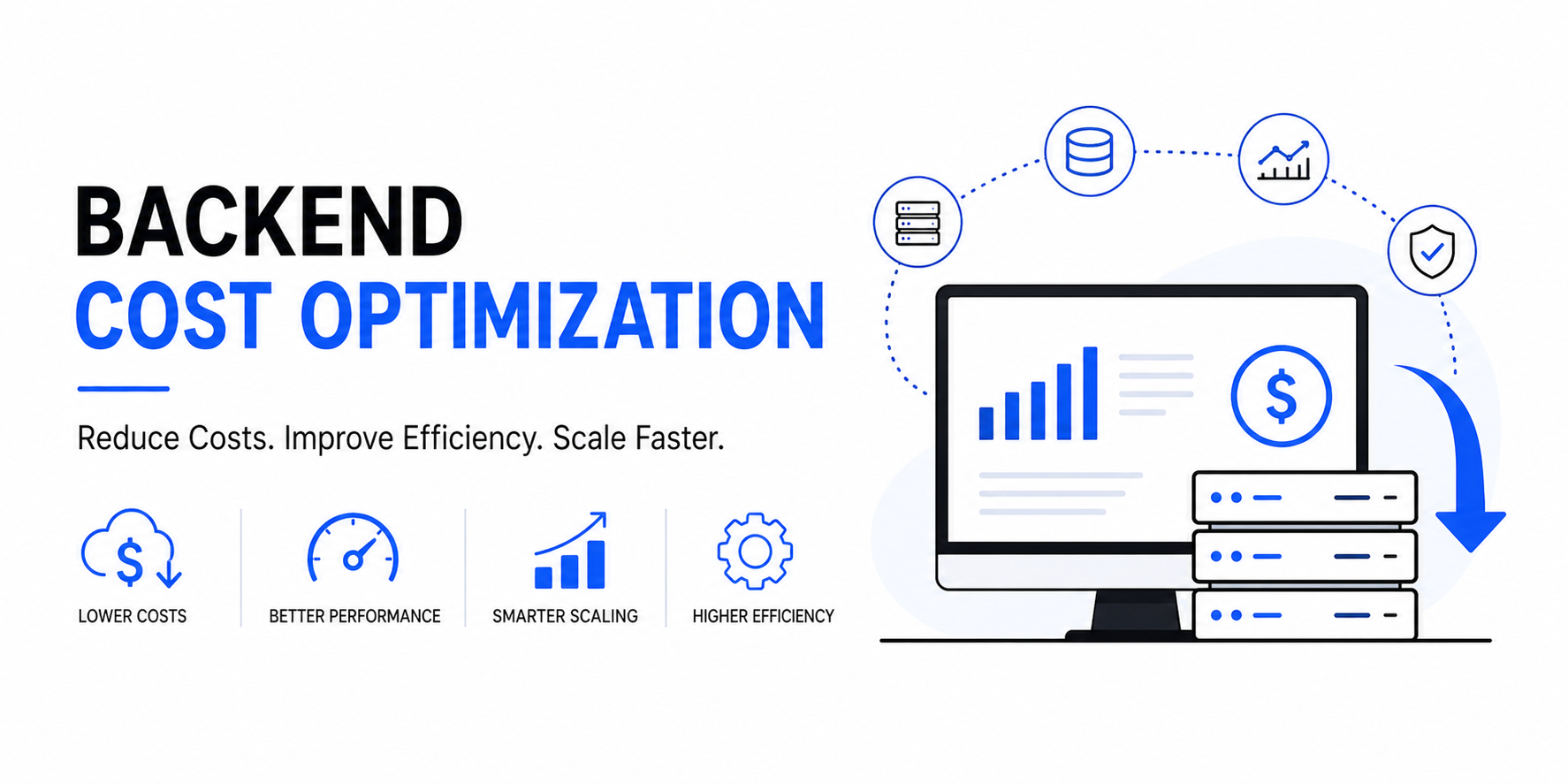
Why Backend Costs Increase as You Scale
Backend systems are designed to handle demand. As demand grows, so does resource usage.
Key Cost Drivers
- Increased server usage
- Growing databases
- Higher API traffic
- More complex infrastructure
- Increased DevOps effort
Without optimization, these costs scale directly with usage—and sometimes faster.
The key insight:
Growth doesn’t have to mean inefficiency.
What Is Backend Cost Optimization?
Backend cost optimization is the process of improving system efficiency to reduce unnecessary expenses while maintaining or improving performance.
It focuses on:
- Eliminating waste
- Improving resource utilization
- Automating processes
- Scaling intelligently
The goal is not to spend less—it’s to spend smarter.
Step 1: Conduct a Backend Cost Audit
The first step is visibility. You need to understand exactly where your costs are coming from.
Audit Focus Areas
| Area | What to Analyze | Common Insight |
|---|---|---|
| Compute | Server utilization | Overprovisioned resources |
| Database | Query performance | Inefficient queries |
| Storage | Data usage | Redundant data |
| Networking | Data transfer | High outbound traffic |
| DevOps | Deployment workflows | Manual inefficiencies |
Most teams discover that a large portion of their backend costs comes from inefficiencies—not actual demand.
Step 2: Right-Size Your Infrastructure
One of the most effective backend cost optimization strategies is right-sizing.
Many systems are overprovisioned to avoid performance issues. While this ensures stability, it also leads to wasted spending.
Optimization Actions
- Reduce server sizes based on actual usage
- Remove idle or unused resources
- Use auto-scaling to match demand
Impact
| Metric | Before | After |
|---|---|---|
| Server Utilization | Low | High |
| Compute Cost | High | Reduced |
Right-sizing ensures you only pay for what you actually use.
Step 3: Optimize Database Performance
Databases are often one of the biggest contributors to backend costs.
Poor query performance increases load, which requires more resources.
Key Improvements
- Optimize slow queries
- Add proper indexing
- Use caching for frequent data
- Archive unused data
Benefits
- Faster response times
- Reduced database load
- Lower infrastructure costs
Efficient data handling is a core part of backend cost optimization.
Step 4: Implement Caching
Repeated requests for the same data can significantly increase backend load.
Caching reduces the need to process the same requests multiple times.
Benefits of Caching
| Benefit | Impact |
|---|---|
| Reduced Server Load | Lower compute costs |
| Faster Responses | Better user experience |
| Lower Database Usage | Reduced expenses |
Caching is one of the simplest and most effective optimization techniques.
Step 5: Automate DevOps Processes
Manual processes increase both time and cost.
Automation reduces human effort and improves consistency.
Key Automation Areas
- Continuous Integration (CI)
- Continuous Deployment (CD)
- Automated testing
- Monitoring and alerts
Impact
| Area | Before | After |
|---|---|---|
| Deployment Time | Slow | Fast |
| Error Rate | High | Low |
| DevOps Effort | High | Reduced |
Automation ensures efficiency at scale.
Step 6: Use Managed Services
Managing every backend component internally can be expensive and complex.
Managed services provide ready-to-use solutions for:
- Databases
- Monitoring
- Infrastructure
- Security
Benefits
- Predictable pricing
- Reduced maintenance effort
- Built-in scalability
- Access to expert tools
Using managed services is a key strategy in backend cost optimization.
Step 7: Monitor and Continuously Optimize
Optimization is not a one-time activity—it’s ongoing.
Key Metrics to Track
| Metric | Purpose |
|---|---|
| Resource Utilization | Identify inefficiencies |
| Cost Trends | Track spending |
| Performance Metrics | Ensure quality |
Continuous monitoring allows you to:
- Detect waste early
- Adjust resources
- Maintain efficiency
Hidden Costs That Affect Optimization
Backend costs are not always obvious.
Hidden Cost Factors
- Downtime and outages
- Technical debt
- Inefficient architecture
- Overprovisioning
- Poor monitoring
Addressing these hidden factors is essential for true backend cost optimization.
Common Mistakes to Avoid
Many teams struggle with optimization due to avoidable mistakes.
Mistakes
- Ignoring cost visibility
- Overengineering systems
- Delaying optimization
- Not using automation
- Choosing the wrong infrastructure
Avoiding these mistakes can significantly reduce costs.
Benefits of Backend Cost Optimization
Optimizing backend systems delivers both technical and business advantages.
Business Impact
| Benefit | Outcome |
|---|---|
| Lower Costs | Improved profitability |
| Better Performance | Enhanced user experience |
| Faster Development | Increased productivity |
| Scalability | Sustainable growth |
Backend cost optimization is not just about saving money—it’s about enabling growth.
When Should You Start Optimizing?
Many teams wait too long to optimize.
Start Early If:
- Your cloud costs are increasing rapidly
- Performance issues are appearing
- Your team spends more time maintaining than building
- Scaling feels expensive
Early optimization leads to better long-term results.
Key Takeaways
- Backend costs increase with growth—but inefficiency makes them worse
- Most cost savings come from eliminating waste
- Automation and monitoring are essential
- Right-sizing and caching deliver immediate impact
- Optimization is a continuous process
Conclusion: Growth and Efficiency Can Coexist
The idea that you must choose between growth and cost control is a myth.
With effective backend cost optimization, you can:
- Scale your product
- Maintain performance
- Control expenses
The key is building systems that are not just powerful—but efficient.
🚀 Ready to Optimize Your Backend Costs?
If your backend costs are rising or unpredictable, it’s time to take control.
With the right strategy, you can:
- Reduce waste
- Improve performance
- Scale sustainably
Start by analyzing your current infrastructure and take the first step toward smarter backend cost optimization.