
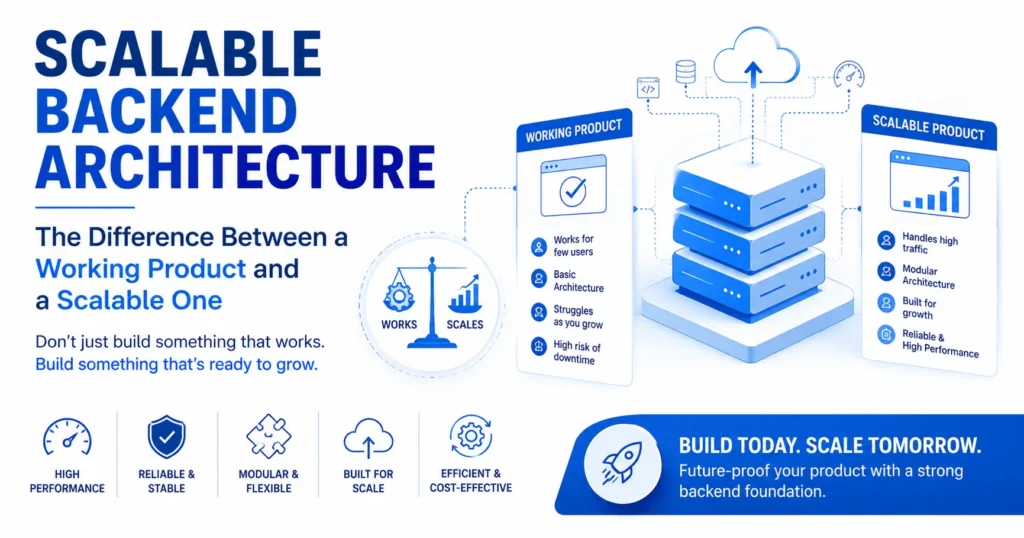
Many startups celebrate the moment their product finally works. The features function, users can sign up, and the system delivers its intended value. It feels like a milestone—and it is. But there’s a critical misunderstanding that often follows: assuming that a working product is the same as a scalable product. This assumption is one of the most dangerous traps founders fall into. A product that works for 100 users can completely break at 10,000. The difference lies in one core factor: 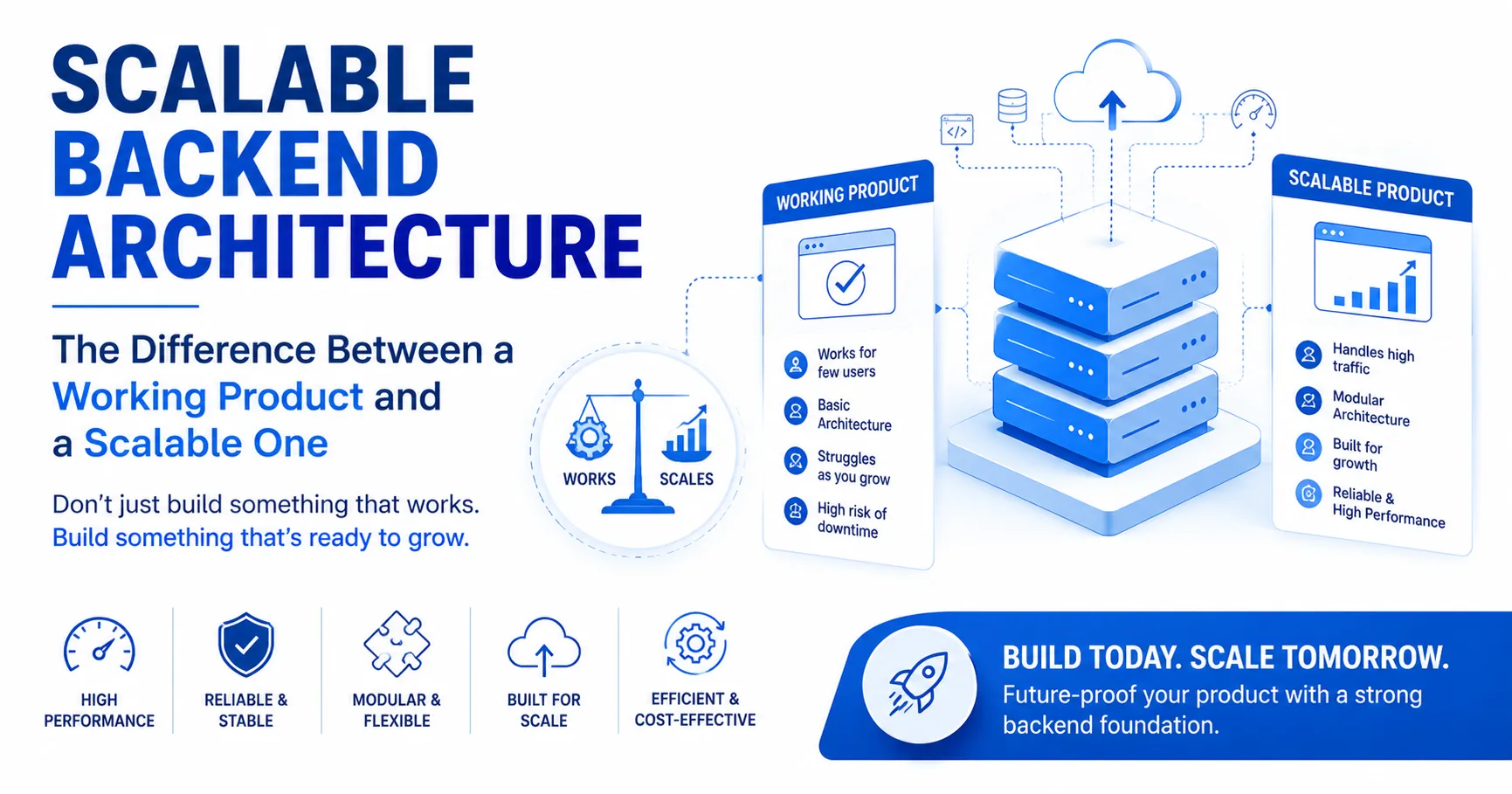 .
.
What Is a “Working Product”?
A working product is exactly what it sounds like—it performs its intended function under current conditions. It allows users to interact with your platform, complete actions, and receive expected outcomes. At an early stage, this is often enough to validate your idea and begin acquiring users.
However, a working product is typically built for speed, not scale. Founders prioritize launching quickly, which often means taking shortcuts in architecture, skipping optimization, and focusing only on immediate functionality. While this approach helps you get to market faster, it creates a fragile system that struggles under pressure.
What Is a “Scalable Product”?
A scalable product goes beyond functionality. It is designed to handle growth—more users, more data, more complexity—without breaking down. It maintains performance, reliability, and efficiency even as demand increases.
At the heart of every scalable product is a scalable backend architecture. This architecture ensures that your system can expand seamlessly, adapt to changing requirements, and maintain stability under load. It’s not just about handling traffic—it’s about enabling continuous growth without constant rework.
Key Differences Between Working and Scalable Products
The distinction between these two types of products becomes clear when you look at how they behave under growth conditions.
Comparison Table
| Factor | Working Product | Scalable Product |
|---|---|---|
| Performance | Stable at low usage | Stable at high usage |
| Architecture | Basic, often temporary | Structured and modular |
| Development Speed | Fast initially | Consistent over time |
| Maintenance | Increasingly difficult | Managed and predictable |
| User Experience | Degrades with growth | Remains consistent |
This table highlights why relying on a working product alone is risky. Without a scalable backend architecture, growth becomes a liability instead of an opportunity.
Why Most Startups Stop at “Working”
The reason many startups never transition from a working product to a scalable one is simple: early success creates a false sense of security. When users start signing up and revenue begins to flow, it’s easy to assume that the system is solid.
But this success often masks underlying issues. The backend may be inefficient, the codebase may be messy, and the infrastructure may not be prepared for scale. These problems remain hidden until growth reaches a tipping point, at which stage they become difficult and expensive to fix.
The Hidden Risks of Staying “Just Working”
Relying on a working product without investing in scalability creates several risks that can slow down or even halt your growth.
Common Risks
- Performance Bottlenecks: Slow response times as traffic increases
- System Failures: Crashes during peak usage
- Technical Debt: Accumulated inefficiencies that slow development
- Poor User Experience: Frustrated users leading to churn
- Delayed Features: Developers spend more time fixing than building
Each of these risks stems from the absence of a scalable backend architecture, which is essential for long-term success.
How Scalable Backend Architecture Changes Everything
A well-designed backend architecture transforms how your product operates. It creates a foundation that supports growth rather than resisting it. Instead of reacting to problems, your system is prepared to handle them proactively.
Benefits of Scalable Backend Architecture
| Benefit | Impact |
|---|---|
| High Performance | Faster response times |
| Reliability | Fewer crashes and errors |
| Flexibility | Easier to add new features |
| Efficiency | Reduced operational costs |
| Growth Readiness | Seamless scaling |
By investing in scalable backend architecture, you ensure that your product can evolve without constant disruption.
The Role of Architecture in Scaling
Architecture is not just about choosing the right tools—it’s about designing how those tools work together. A scalable system is built with modular components, clear separation of concerns, and efficient data handling.
This allows different parts of the system to scale independently. For example, if user traffic increases, you can scale your servers without affecting other components. This flexibility is what enables sustainable growth.
Transitioning from Working to Scalable
Moving from a working product to a scalable one requires intentional effort. It’s not about rebuilding everything from scratch, but about optimizing and restructuring your system to handle growth.
Steps to Transition
- Audit Your Current System
Identify bottlenecks, inefficiencies, and areas of risk. - Refactor Your Codebase
Clean up technical debt and improve structure. - Implement Modular Architecture
Break your system into manageable components. - Adopt Scalable Infrastructure
Use cloud solutions that can grow with your needs. - Introduce Automation
Streamline deployment, testing, and monitoring.
These steps help you build a scalable backend architecture that supports long-term growth.
Why Timing Matters
The best time to invest in scalability is before you need it. Waiting until your system starts breaking under load makes the transition more complex and costly. Early planning allows you to integrate scalability into your development process, reducing the risk of disruption.
However, even if you’re already experiencing issues, it’s not too late. Addressing scalability now can prevent further complications and set your business on the right path.
The Business Impact of Scalability
Scalability is not just a technical concern—it’s a business advantage. A scalable product allows you to respond quickly to market opportunities, handle increased demand, and deliver a consistent user experience.
Business Benefits
- Faster Growth: Ability to onboard more users without issues
- Higher Retention: Better user experience leads to loyalty
- Lower Costs: Efficient systems reduce operational expenses
- Competitive Advantage: Faster execution and innovation
These benefits highlight why investing in scalable backend architecture is essential for any startup aiming to grow.
Conclusion: Working Is Not Enough
A working product is just the beginning. It proves that your idea has potential, but it does not guarantee long-term success. To truly grow, you need a system that can handle increasing demand without breaking down.
The difference between a working product and a scalable product lies in your backend. By building a scalable backend architecture, you create a foundation that supports growth, enhances performance, and enables continuous innovation.
Ready to Build for Scale?
If your product is working but you’re unsure whether it can handle growth, now is the time to act. Investing in scalability today can save you from costly problems tomorrow.
👉 Get a backend audit and discover how to transform your product from “working” to truly scalable.